
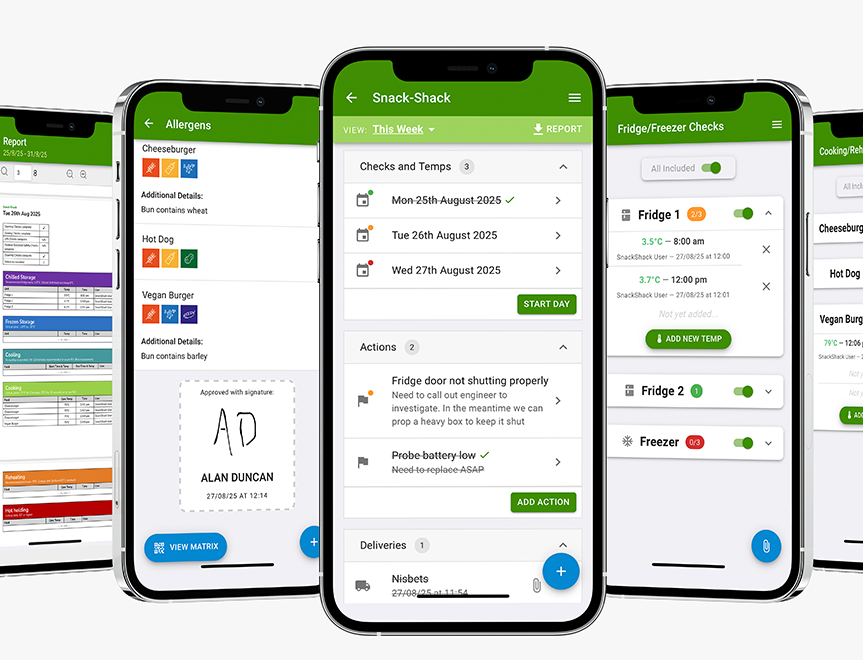
Digital Food Safety System
Save time, reduce hassle and keep your business inspection-ready.


The Situation:
A member received an allegation of anaphylaxis weeks after a busy outdoor event and didn’t know how to respond.
The Risk:
Poor handling could escalate to a formal investigation, insurance complications, reputational damage, or an avoidable claim.
The Result:
A calm, professional response backed by due diligence — and the complaint resolved with no further action.
Value:
Protected the business, reduced stress, and ensured the member handled the situation correctly and confidently — with the NCASS team behind them.
Food allergens are food safety hazards and command a great deal of attention from caterers who have a legal responsibility to declare allergens in the food products they sell, assess their food allergen risks and take reasonable steps to prevent their cross contamination.
A food allergen incident is when someone has an adverse, often severe, allergic reaction to an allergen present in food that is consumed, triggering symptoms from mild itching to life-threatening anaphylaxis, requiring immediate emergency care for severe cases.
Although rare, incidents do happen. Most allergic reactions happen immediately, often within minutes of consuming food, but sometimes can be delayed by hours. Most often the food business is aware of the incident straight away.
Sometimes the business is not made aware early on, with a complaint being reported some weeks after the alleged incident. In these circumstances the business may question the validity of the complaint based on the information provided and the systems they have in place.
The business should take the claim seriously even if they suspect it is false and they are confident in their food allergen management systems. They should investigate it, evaluate their evidence – this is why businesses have due diligence in place, to evidence they did all they could to prevent an incident.
Receiving a complaint or allegation of an allergen incident is distressing for business owners, and having helpful experts on hand to provide advice and reassurance at times like this is invaluable. NCASS helps members to handle complaints well, turning a negative experience into a chance to show excellent customer care and improve the business.
In moments like this, members don’t need guesswork — they need reassurance, a clear process, and a team behind them.
Out of the blue, several weeks after trading at a busy outdoor event, a member was contacted by a member of the public who had attended the event and purchased food from their catering unit, claiming the food they had purchased had caused them to have an allergic reaction (anaphylaxis), resulting in an overnight stay in hospital. The complainant offered to provide medical evidence of their treatment for anaphylaxis, requested specific details of the members allergen management procedures and asked for compensation considerations.
The member was initially shocked to receive the allegation. Neither they nor the event organiser had been made aware of the incident until now. The member was able to recall the customer who during the event had specifically requested information about the suitability of the food in relation to a peanut allergy. They were able to recall their conversation with the customer at the time they placed their food orders because the type of request is rare and requires their specific attention.
The member was able to recall the written information that was provided at the time of the ordering – no nut ingredients were present in the food items selected. Knowing the customers sensitivity they also took additional precautionary steps to prepare their order in line with their food safety risk assessment.
The member was confident in the steps that they had taken to support the customer with suitable food choices but was unclear and nervous about the next steps to take and how to approach the complaint.
Step 1: Initial Triage
The member reached out to their NCASS Account Manager who was able to give them some initial advice on acknowledging the complaint, structuring their investigation and putting them in touch with an advisor at Giles insurance.
Step 2: Expert Support
When the complainant continued to pursue the member for information and requests for compensation, the member approached NCASS for further advice. This time they had a conversation with the NCASS Environmental Health Specialist who talked through the allergen management controls that were in place at the time of the alleged incident and the systems in place going forward. The member was reassured of their controls and was given advice on how to record the allegation and their subsequent investigation, to support their due diligence.
Step 3: What to Expect Next
Environmental Health Officers and Trading Standards Officers will often investigate allergen incidents. In this case the complainant had not yet reported the incident to the local authority. The NCASS Environmental Health Specialist was able to discuss with the member what an investigation by the local authority would like and how the member could support the process. The member was then reassured about local authority investigations and the relevance of their due diligence with such matters.
Step 4: Final Response & Escalation Support
Finally, the member was given advice on how to summarise their actions as part of a final response to the complainant. This included reiterating they would support the complainant contacting the Environmental Health Service at their local authority who can investigate the incident and let the evidence speak for itself.
The member was also reminded that as part of their membership they had access to the NCASS legal partners, McKenzie Legal services, should they need further legal advice. They were reassured by this — and felt supported knowing the right people were behind them if it escalated.
The member was able to react appropriately to the allegation that they were responsible for an allergen incident. They were able to review their allergen management systems and have reassurance in their due diligence and communicate confidently with the complainant.
The member was able to demonstrate they had a robust allergen management system in place and had taken all reasonable steps to prevent the incident, proving they acted responsibly and was not at fault. The complaint was subsequently resolved with no further action taken against the member.
Most importantly, the member regained confidence and clarity — with a clear record of due diligence and the NCASS team behind them throughout.
NCASS Account Manager:
First-line support to help you respond fast, structure your investigation, and keep things under control
Environmental Health Specialist:
Expert guidance on allergen controls, due diligence, and what to expect if the local authority becomes involved
Giles Insurance:
Support with insurer notifications and next steps where claims are raised
McKenzie Legal Services:
Legal advice available to members if a complaint escalates or you need formal support
Food businesses should have an incident response plan in place – a procedure that they will follow if an allergen incident or food complaint is reported. This is to react appropriately, properly understand what has arisen, investigate and check their allergen management systems and food safety control measures. The aim and objectives of such a plan is to understand what happened, determine if there were failures and if so, prevent a reoccurrence and make improvements, but also confirm if they were not negligent.
Our top tips for dealing with an allergen incident or food complaint:
Get expert guidance, reassurance, and a clear plan — with the NCASS team behind you.
Get Expert Support

 Featured Training