
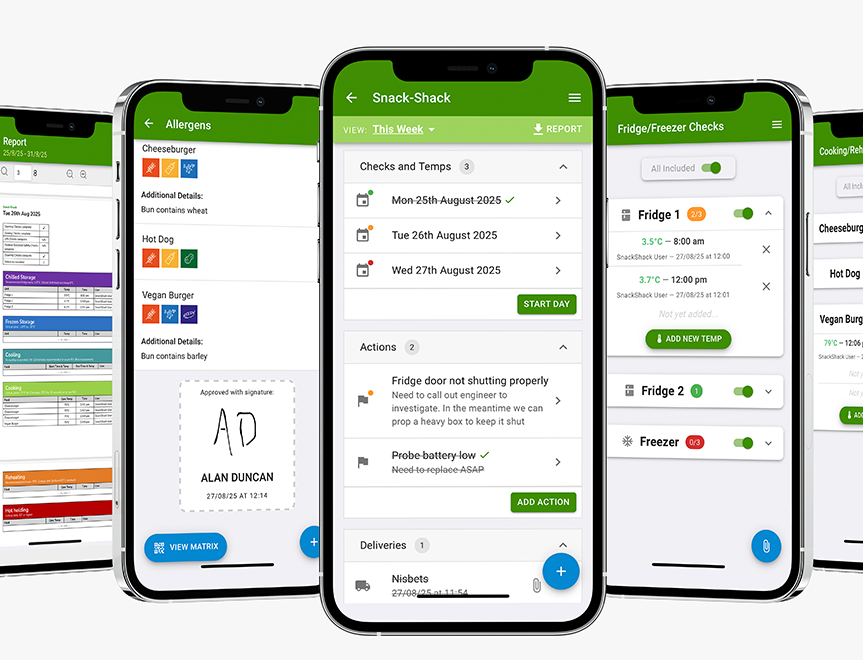
Digital Food Safety System
Save time, reduce hassle and keep your business inspection-ready.


When something goes wrong, you’re not alone –
the NCASS team stands behind you with practical, step-by-step support.
The Situation:
Serious burn injury to a staff member during service; ambulance attendance; distressed owner seeking urgent guidance.
The Risk:
Regulatory breaches, poor incident handling, reputational damage, staff anxiety and the potential for enforcement action.
The Result:
Structured response plan, correct reporting, positive recovery outlook, and no further local authority investigation.
Value:
Clarity under pressure, compliant reporting, insurer-ready documentation, and faster return to normal operations.
Accidents are unpredictable and emotionally charged. In June 2025, a member called us after a kitchen incident where a team member sustained significant burns and was taken to hospital. They needed reassurance, a clear plan, and confidence that they were handling everything correctly.
Triage
Account Manager reassured the member, gathered the facts, and escalated immediately to specialists.
Expert review
Colden HR provided employment-law templates and guidance to record the incident and meet employer obligations. The NCASS Environmental Health Specialist (EHO) debriefed the incident with the member to understand what happened and confirm immediate priorities.
Action plan
We set out clear next steps:
Inspection prep
We explained likely local-authority follow-up after a RIDDOR submission and what outcomes to expect, so the member understood the process and felt prepared.
Environmental Health Specialist
Incident triage, reporting routes, risk assessment updates
Colden HR Services
Employment-law templates, process guidance and records
Learn more: HSE: RIDDOR key definitions
“It was terrifying in the moment, but your step-by-step plan, HR templates and EHO guidance made everything clear. I finally felt confident we were doing the right things.”
Get expert HR and EHO support when it matters most.
Get Expert Support More Success Stories



 Featured Training