
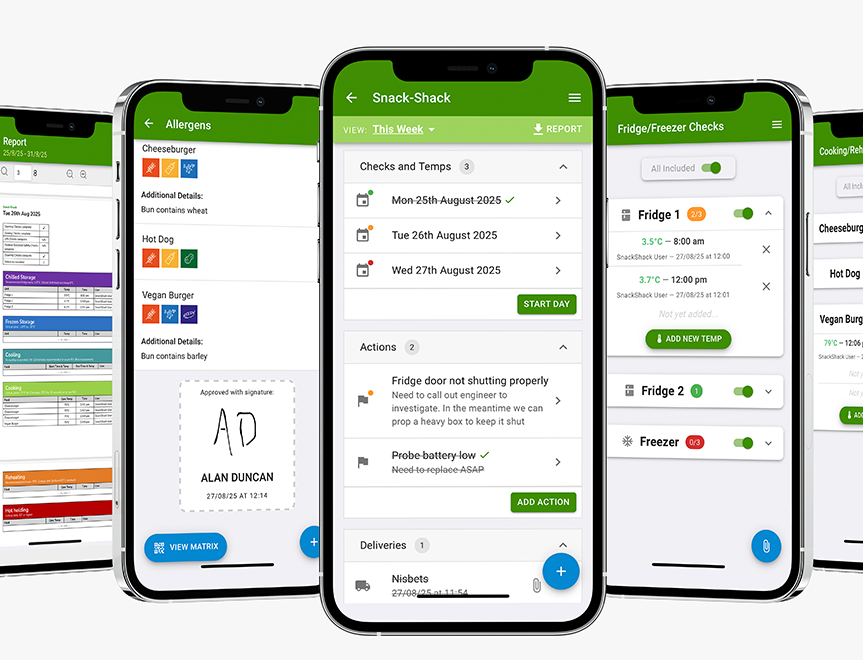
Digital Food Safety System
Save time, reduce hassle and keep your business inspection-ready.

Here at NCASS we pride ourselves on helping members with everyday compliance solutions. The new year has dawned, and we will continue to share with you regular LPG safety tips and advice throughout 2026.
There are plans later this year for the publication of more comprehensive LPG codes of practice for gas engineers to implement. NCASS will keep you updated on exactly what this means for you. In the meantime, we will keep you posted on the best LPG safety practices, starting with our winter LPG safety tips.
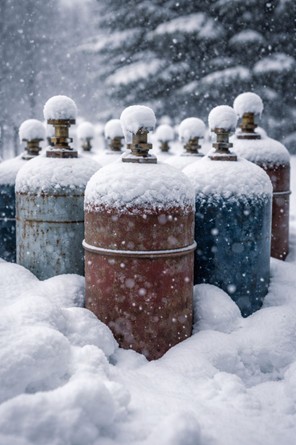
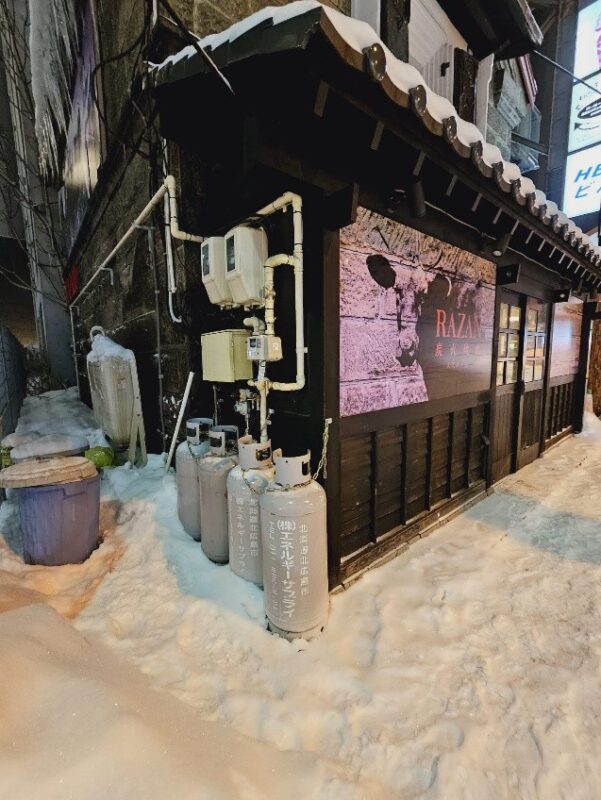
Don’t be tempted to bring LPG cylinders indoors this winter. If you are worried about leaving cylinders outdoors particularly in the snow or wintery weather, don’t be!
Outdoor lockers and compartments purposely built for the storage and use of cylinders could be considered as a great all year-round storage solution. The benefits are – in extreme weather conditions, ice, snow and rain do not directly contact the cylinders. Likewise in the summer months it can protect the cylinders from direct sunlight.
Propane cylinders (red cylinders) are perfectly fine being stored or used outdoors, even during the winter.
If propane cylinders are properly sized to the gas supply and are safely connected to appliances then they will work effectively at temperatures as low as -42oC.
Unlike Butane which will stop working at -2oC.
Remember LPG cylinders must be:
And don’t forget the minimum distances to reduce the risk of fire and explosion.
There must be a minimum distance of 1m between LPG cylinders and:
There must be a minimum distance of 2m between LPG cylinders and:
Do I need a cylinder blanket?
No, you don’t!
It should not be necessary to use a cylinder blanket in the UK. They should not be used as they will make the cylinder volatile.
Cylinder blankets, also known as cylinder sleeves, are insulated, thermostatically controlled cylinder wraps designed to focus concentrated heat on the cylinder to force as much gas out as possible and increase the “offtake supply”.
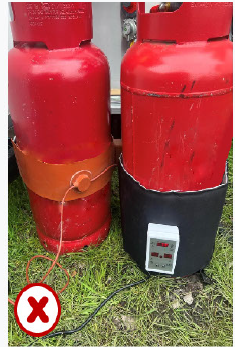
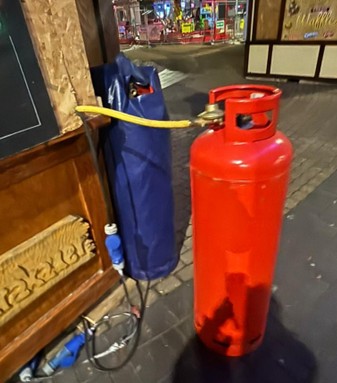
A cylinder jacket, not to be confused with a blanket, is just an insulated quilt cover that is used widely in countries that experience low temperatures and extreme weather conditions. A cylinder jacket is also not required for use in the UK.
If either a cylinder blanket/sleeve or jacket are being used in the UK it is ordinarily used as a counteracting measure to stop the cylinders freezing where they have not been sized correctly to the gas supply.
Why do I have frosting on cylinders?
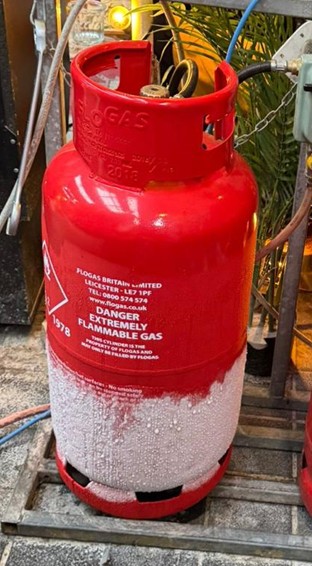
If you see a layer of frosting appear around the liquid line of cylinders, this should not be ignored. It is not simply because of cold weather conditions but is often indicative of something more serious.
Frosting on cylinders is usually an indication that the cylinders are undersized to the gas supply needs. The appliances are demanding more gas than the cylinder can effectively deliver, making it harder and harder for the cylinder to deliver the gas needs. This causes a chemical reaction that results in frosting on the outside.
There may be a problem with a gas appliance or the number/size of cylinders needs to be increased. There could be incomplete combustion taking place within the mobile catering unit, resulting in the production of the poisonous gas Carbon Monoxide.
Advice should be sought from a competent Gas Safe Registered LPG engineer who will be able to check the gas supply etc.
Do not ignore frosting on connected cylinders. It is not because of cold weather conditions.
Looking for a competent LPG engineer?
As part of the NCASS commitment to increase standards around LPG usage and safety within the hospitality sector, we have created our Gas Engineer Partnerships (GEPs).
GEPs are qualified and competent Gas Safe Registered LPG engineers that have been carefully selected based on their implementation of the correct mobile LPG standards.
The Gas Engineer Partnerships ensure that our members can access assured and competent gas engineers that meet the standards we have set, so members can rest assured they are acting and operating in compliance.
Find your nearest Gas Engineer Partner (GEP) – tried and trusted engineers competent in LPG. Log into the members only gas engineer page.
More information
For more useful advice and information check out all the previous features “LPG Safety in the Spotlight” on the NCASS Gas Hub.
Check out our free guides on the NCASS Gas Hub Free Resources area.


 Featured Training