
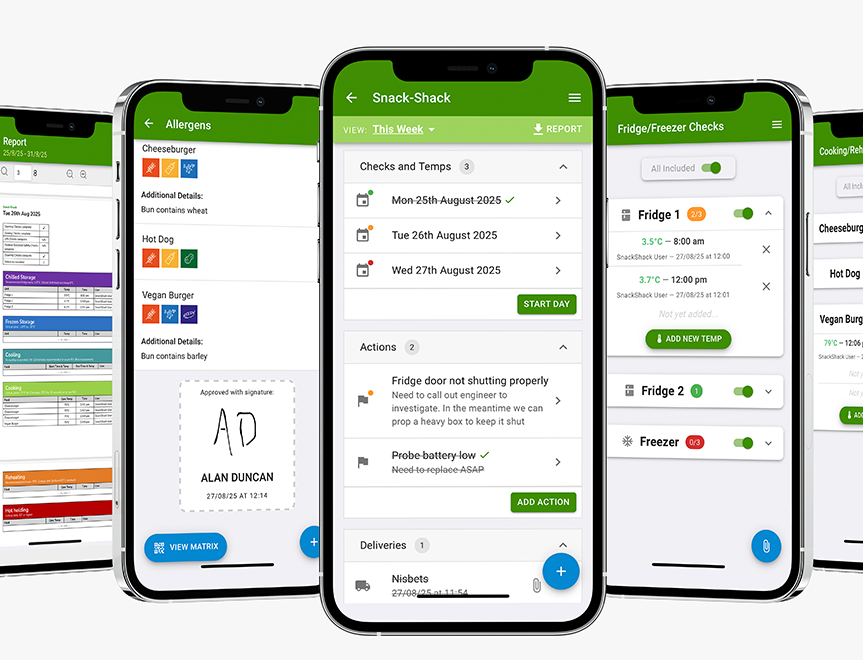
Digital Food Safety System
Save time, reduce hassle and keep your business inspection-ready.


For most hospitality businesses, reviews sit somewhere between “we know we should be doing more” and “we’ll get round to it when things quiet down.” The reality is, if you don’t ask, you don’t get – only around 5–10% of customers leave reviews unprompted. And more often than not, it’s the unhappy ones who take the time.
But there’s a catch. Ask the wrong way, at the wrong time, and you risk coming across pushy, awkward – or worse, transactional. But done properly, asking for reviews can feel like a natural part of your customer experience, not an afterthought.
Here’s how to do it in a way that works.

Want more simple, proven ideas to help you get found locally, attract more customers, and turn first-time visitors into regulars?
First of all: asking for reviews isn’t begging for compliments. It’s part of running a modern hospitality business.
Reviews are today’s word-of-mouth. They influence where people eat, drink and spend – and they directly impact visibility online and footfall. More importantly, they help future customers understand what your business is actually like.
So drop the apologetic tone. Lines like “sorry to bother you” or “‘if you don’t mind” can actually reduce response rates and make the ask feel a little awkward.
Instead, treat it as what it is: a normal, confident part of service.
If there’s one thing that separates a natural ask from a desperate one, it’s timing.
The best moment to ask is right after a positive experience, while it’s still fresh in the customer’s mind. In hospitality, that could be:
What you want to avoid is:
Get the timing right, and the ask feels natural. Get it wrong, and it feels forced.
The best review requests don’t sound like marketing – they sound like people.
Whether it’s in person or via message, keep it simple:
“Really glad you enjoyed it – if you’ve got a minute, a quick review really helps us.”
That’s it. No scripts, no pressure, no overthinking.
Customers are far more likely to respond when the ask feels conversational rather than corporate. In fact, in-person requests are often the most effective, because the interaction is immediate and genuine.
Even happy customers won’t leave a review if it takes too much effort.
The golden rule: remove all friction.
That might mean:
The easier it is, the more likely it happens. Even small barriers – like having to search your business – can kill intent.
And remember: one clear ask beats multiple reminders. Overdoing it quickly tips into annoyance.
It’s tempting to push for ‘5-star reviews only,’ but it’s the fastest way to undermine trust.
Customers (and platforms) can spot inauthenticity a mile off. Incentivising reviews or steering only happy customers to leave them can even break platform rules.
Instead, keep it honest:
“We’d love to hear what you think.”
Interestingly, encouraging customers to reflect on what they enjoyed can actually reinforce positive memories of their experience – which naturally leads to better reviews anyway.
Your front-of-house team are your biggest asset when it comes to reviews. They’re the ones building relationships, spotting happy customers, and creating those ‘ask moments.’
But this only works if it feels natural.
Don’t turn it into a rigid script or performance-heavy task. Instead:
A well-timed, sincere ask from a team member will always outperform a forced one.
One of the easiest wins? When a customer already says something positive.
If someone tells you “that was amazing,” that’s your cue:
“That’s great to hear – would you mind popping that into a quick review?”
You’re not creating a new ask – you’re just redirecting existing feedback. And that’s where reviews feel most natural.
Finally, remember that asking is only half the job.
What you do with reviews matters just as much:
Handled well, reviews become more than just ratings – they become a continuous feedback loop that strengthens your business over time.
Asking for reviews doesn’t need to feel awkward or desperate.
If the experience is good, the timing is right, and the ask is simple, it becomes just another part of great service.
Download our quick checklist so you won’t just get more reviews – you’ll get better ones.
At NCASS, we work with thousands of bars, cafés and restaurants across the UK. From getting found online to expert guidance when you need it, we’re here to help your business thrive. Call us on 0300 124 6866 to chat.


 Featured Training