
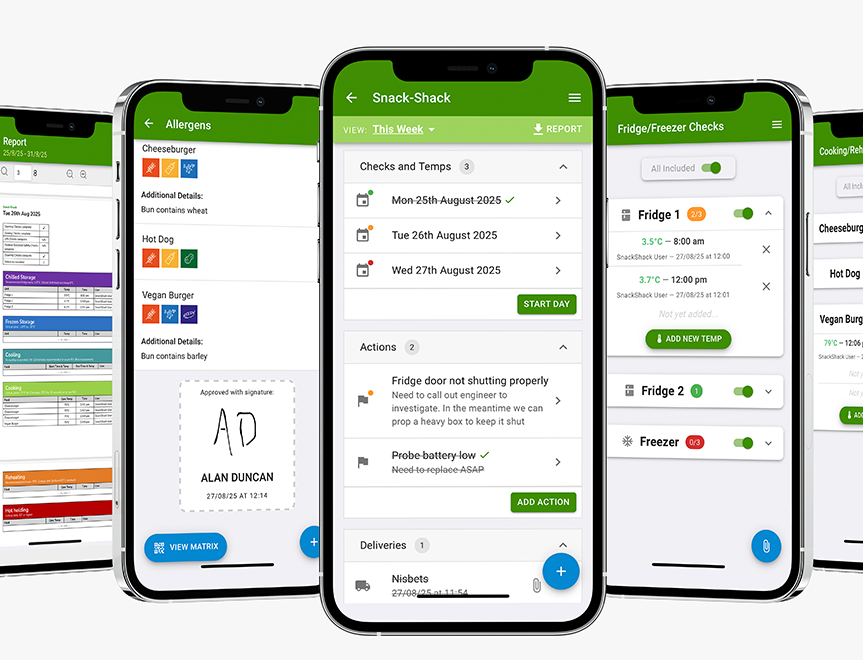
Digital Food Safety System
Save time, reduce hassle and keep your business inspection-ready.

Most hospitality businesses already have a website, but having a website and having a website that actively drives bookings are two very different things. With an average of 59% of diners now preferring to book their table online, it’s more important than ever to have an effective website.
If your café, bar or restaurant site looks good but isn’t filling tables, generating enquiries, or pulling its weight commercially, it may be time to review how it’s performing and how your web designer or agency is supporting you.
Hospitality owners often come to us with similar frustrations about their existing website:
You don’t need technical knowledge to challenge these issues; you just need the right questions.
This checklist is designed to help you review your current website, guide conversations with your existing designer or agency and ensure your site is working as a commercial asset, not just a design project.
Want more simple, proven ideas to help you get found locally, attract more customers, and turn first-time visitors into regulars?
Your website’s primary job is to turn visitors into paying guests. If people are landing on your site but not booking, something in the journey may be unclear, slow or frustrating.
Ask your web designer or agency:
Most hospitality searches and bookings now happen on mobile. A site that technically works on mobile isn’t enough – it must be designed around mobile behaviour.
Check with your designer or agency:
What good mobile experience looks like:
Slow websites lose bookings. Guests won’t wait for pages to load, especially when they’re deciding where to eat right now.
A healthy site should load in around 1–3 seconds, with content appearing almost instantly and no lag when clicking buttons.
Questions to ask:
If pages load slowly, Google may also rank your site lower, reducing visibility and foot traffic.
Even if you’re not actively applying SEO principles, your website should be set up so Google clearly understands:
Ask your designer or agency:
SEO doesn’t need to be complicated, but without the basics your website may struggle to appear when nearby diners are searching.
If you can’t see how your website is performing, you’re guessing.
You don’t need complex reports, just clear insight into whether your site is doing its job.
Ask your designer or agency:
Key metrics every hospitality owner should understand:
This helps you spot issues early and invest confidently.
Your website should work around your business, not the other way around.
Clarify with your designer or agency:
Ask about updates and flexibility:
Hospitality businesses change frequently and your website needs to be able to keep up.
This checklist isn’t about confrontation, it’s about clarity.
Before you go into any discussions, be clear on what a good hospitality website should do:
Use this checklist to:
A well-performing hospitality website should support bookings, visibility and guest confidence – not just look good in a portfolio.
If your website feels slow, confusing or underperforming as a guest, it probably is.
Need more hands-on support with your marketing?
At NCASS, we work with thousands of hospitality businesses across the UK. From getting found online to expert guidance when you need it, we’re here to help your business thrive. Call us on 0300 124 6866 to chat.

 Featured Training