
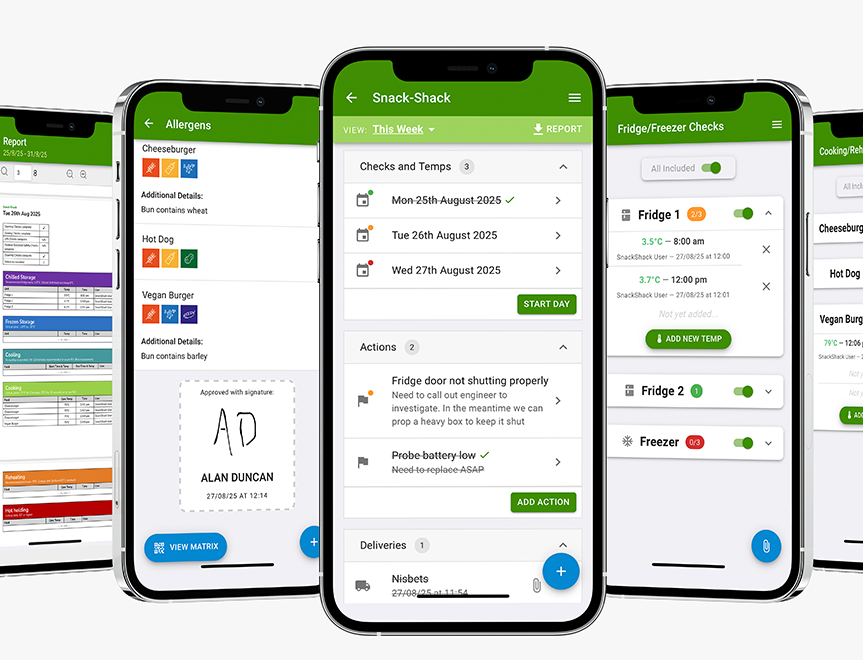
Digital Food Safety System
Save time, reduce hassle and keep your business inspection-ready.


The Situation:
A caterer relied on basic Terms of Business copied from an old template found online. When a large corporate event went wrong, they discovered their terms didn’t protect them, and actually left them exposed.
The Risk:
Unclear liability limits, no cancellation provisions, no protection for late payments or supply issues, and vulnerability under consumer law.
The Result:
Comprehensive new Terms of Business drafted to balance legal compliance with commercial protection. The business now operates confidently with watertight contracts and reduced financial risk.
Value:
Greater legal certainty, reduced disputes, improved professionalism, and stronger cash flow management.
In spring 2025, a catering business contacted us after a corporate client refused to settle their final invoice, claiming “poor service”. The business had standard terms copied years earlier- a single page with no mention of payment deadlines, liability, or dispute resolution.
The client threatened to withhold payment and post negative reviews. When challenged, it became clear that the caterer’s terms lacked any real protection. They needed urgent advice on enforcing payment and safeguarding future bookings.
Step 1: Initial Triage
We reviewed the existing Terms and the correspondence trail to assess whether any implied contractual rights could be relied on under the Supply of Goods and Services Act 1982. The lack of written clarity made recovery difficult – but not impossible.
Step 2: Expert Review
McKenzie Legal examined the contractual weaknesses, identified key compliance gaps, and provided immediate advice on recovering the unpaid invoice while maintaining a professional relationship.
Step 3: Action Plan
We then created robust new Terms of Business tailored to the catering sector, including:
Step 4: Implementation:
The caterer was trained to issue written terms before accepting deposits. Every quote now includes a clear link to the Terms, with digital acceptance required before bookings are confirmed.
McKenzie Legal & HR:
Specialists in commercial contracts, business protection, and dispute resolution for catering and hospitality businesses
Don’t risk opening with an unsafe or non-compliant unit. Get expert guidance from day one.
Get Expert Support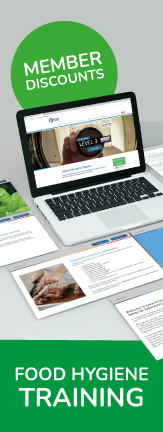


 Featured Training