
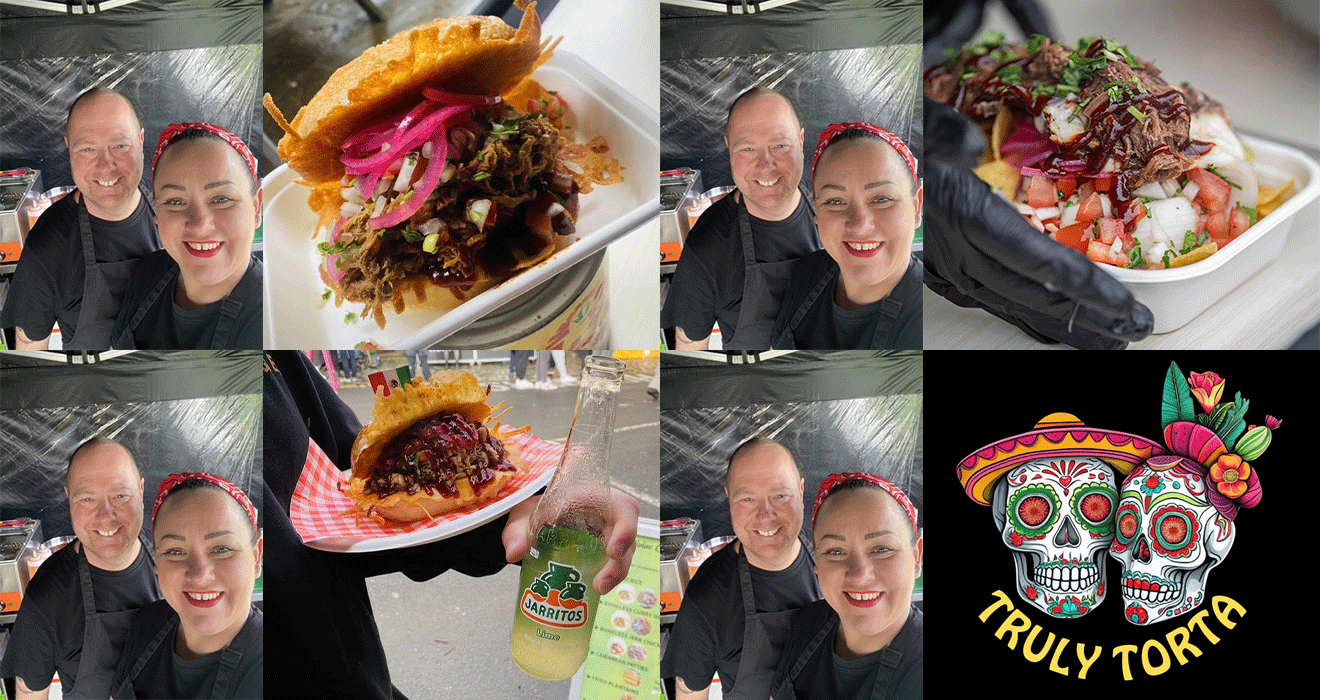
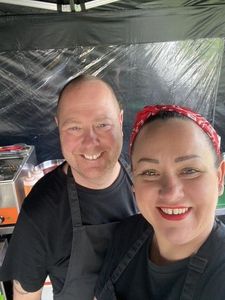
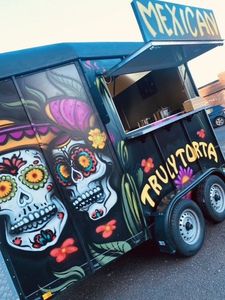
In Newcastle upon Tyne’s growing street food scene, Truly Torta has built a reputation for doing things differently. Run by owner Andy Dobbin – a former sandwich shop operator with more than a decade of hospitality experience – the business was born from both setback and careful research, shaped by extensive time spent exploring Mexico’s street food culture firsthand. Focused on traditional Mexican tortas and authentic flavours rarely seen outside major UK cities, Truly Torta reflects a commitment to craft, cultural respect and starting again with purpose.
In this Q&A, Andy discusses rebuilding after loss, learning from Mexican vendors, and why authenticity sits at the centre of everything he serves.
Before Truly Torta, you already had a long-established food business. What was your background before street food?
My wife and I ran a sandwich shop in Newcastle city centre for around 12 years. It was a busy, successful operation with a strong following. We focused on creative, well-executed sandwiches and high-volume service, so we learned very quickly about consistency, prep, flavour balance, and how to run a food business properly day in, day out.
How did that experience influence what you do now?
Massively. Street food might look informal, but the fundamentals are exactly the same. If anything, there’s less room for error. Running a sandwich shop taught me how small changes affect hundreds of customers, how to work efficiently under pressure, and how to build food people come back for. Truly Torta is built on that foundation – it isn’t a first venture or a side project.
That business came to an abrupt end during COVID. What happened?
We closed in March 2020, like everyone else, and tried to reopen later in the year. The problem was that our entire customer base – office workers – had vanished. On paper, we were “allowed to open,” which meant we didn’t qualify for grants or meaningful support, but in reality there was no trade. We spent months trying to make it work before having to accept that it was over.
What was the personal impact of that loss?
We lost everything. We sold our house, our car, our motorhome – we completely downsized our lives. It wasn’t just the loss of income; it was losing something we’d built over more than a decade. That changes how you think about risk and resilience.
You stepped away from food briefly after that. Why?
Out of necessity more than choice. My wife retrained as a dog groomer, and we opened a grooming salon in an empty unit her parents owned. It made sense practically, but it confirmed something important – food isn’t just what I do, it’s who I am. I missed the pace, the creativity, and the pressure of hospitality.
When did the idea of returning to food start to take shape?
Around 2023. I’d had time to process everything, and I started looking seriously at street food. I have friends in the street food scene and a younger brother who’s a chef with restaurants in London, so the world wasn’t unfamiliar. I travelled down to London to research markets like Boxpark and Camden, but interestingly, what stood out most was what wasn’t being done back home.

What gap did you identify?
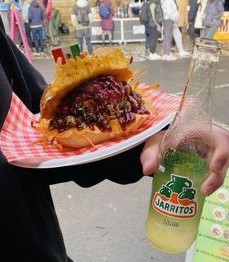
Mexican food in the North East is limited, and what does exist often leans toward Tex-Mex or stops at tacos. There was very little representation of traditional Mexican street food, especially anything beyond the obvious.
Your connection to Mexican food predates Truly Torta. How did that develop?
Over the years, my wife and I spent roughly nine weeks in Mexico across multiple trips. Even though they were holidays, food was always the focus. I spent a lot of time watching street vendors, asking questions, and paying attention to technique. On our final trip, we spent three weeks in Puerto Vallarta and became friendly with a local vendor who showed us both outstanding street food and places that cut corners. That contrast was incredibly educational.
What did those experiences teach you?
That Mexican street food is about correctness rather than reinvention. Vendors aren’t chasing trends, they’re refining dishes that already work. The balance of flavours, the restraint, the respect for ingredients – that stayed with me far more than any single recipe.
How did that lead you specifically to tortas?
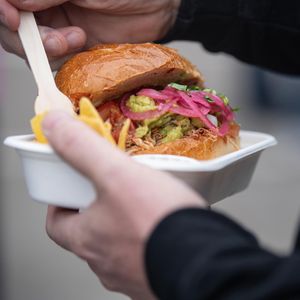
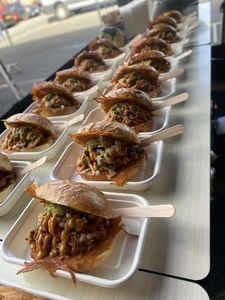
Tortas were everywhere in Mexico. They’re traditional grilled sandwiches – filling, affordable, and deeply embedded in everyday food culture. Given my background in sandwiches, it felt like a natural crossover. When I looked at the UK street food scene, especially in the North East, almost no one was doing them. It felt like an opportunity that made sense both culturally and professionally.
Why not focus on tacos, which are more familiar to UK audiences?
Tacos are great, but they’re already well represented, and it’s easy for them to drift into Tex-Mex territory. I wanted to do something that reflected both our research and our experience. Tortas allowed us to introduce authentic Mexican flavours in a format people already understand.
Starting again financially must have been daunting. How tight were resources?
Extremely tight. After everything we’d lost, I had about £3,000 left. That had to cover all equipment – gazebo, grill, everything. By 2024, we’d committed our last savings. There was no backup plan, but by that point, I knew that half-measures wouldn’t work.
What were the biggest early challenges?
Ingredient sourcing, without question. Authentic Mexican suppliers are often based in the south, and many won’t engage unless you can commit to large minimum orders. As a small street food trader, that dictated what I could realistically serve early on. It forced me to be disciplined with the menu and patient with growth.
How did you balance authenticity with those limitations?
By focusing on technique and intent rather than rigid replication. Some ingredients are difficult to source consistently in the UK, so you adapt carefully without compromising flavour balance or method. Authenticity isn’t about perfection, it’s about understanding why dishes are made the way they are.
You’re very clear about avoiding Tex-Mex. Why does that matter so much to you?
Because Mexican food has its own identity and deserves respect. I didn’t want to dilute it or Americanise it for convenience. What we serve is rooted in traditional Mexican street food – the flavours, the techniques, and the philosophy behind it.
You’ve received some powerful feedback from Mexican customers.
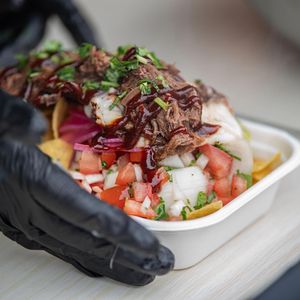
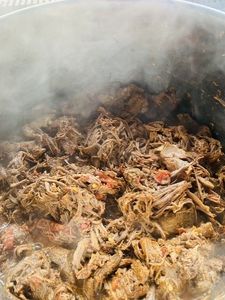
One moment that really stayed with me was a Mexican woman studying in Newcastle who tried our cochinita pibil torta and told me it reminded her of her grandmother’s cooking. When someone from that culture tells you that, it means the research and respect are coming through.



What does a typical working week look like now?
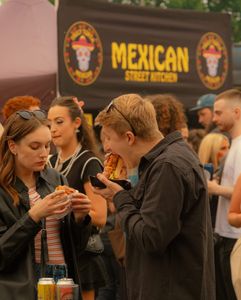
Every Sunday we trade at Newcastle’s Quayside Market, which has become a cornerstone for us. Beyond that, it’s prep days, supplier orders, admin, social media, pub pop-ups, corporate catering, weddings, and local festivals. No two weeks are the same.
You’re selective about which festivals you attend. Why?
Pitch fees and realism. There’s an unwritten rule that pitch fees shouldn’t exceed about 10% of expected takings, but many large festivals ignore that. For a small business, that’s a big risk. Local events, pubs, and markets often make far more sense.
You’ve also competed in street food competitions. What do those experiences offer?
They’re intense but valuable. At our first Mexican Standoff event, we served nearly 2,000 portions in a weekend and placed fourth out of around 20 traders. It tested everything -prep, workflow, consistency – and proved we could operate at that level.
How would you describe the street food community in the North East?
Quietly competitive but very supportive. Traders share advice, supplier contacts, and warnings about venues. If someone runs out of stock mid-service, others step in. That sense of community makes a big difference.
Social media seems central to the business. How intentional is that?
Very. My wife runs it, and it genuinely drives footfall. People decide what they’re eating before they arrive. If they can’t find you online or don’t know where you’ll be, you don’t exist.
Looking back now, how essential was the research done in Mexico before launching Truly Torta?
Completely essential. Without it, the business wouldn’t have the confidence or clarity it does. Those trips shaped the menu, the values, and the way we approach food. We weren’t copying or guessing, we were building on real experience.
What do you want people to understand when they eat your food?
That it comes from a place of experience, research, and respect – not trend-chasing. Truly Torta is the result of years in food, time spent learning in Mexico, and a commitment to doing things properly.
What advice would you give to someone starting a street food business now?
Be different, but be genuine. Don’t chase trends, find gaps. Research properly, respect the cuisine you’re working with, and understand that the early stages are hard. Trust takes time.
Finally, what does success look like for you now?
Sustainability. A business that pays us properly, stays true to what we set out to do, and keeps growing without burning us out. We’ve already come back from nothing once – now it’s about building something that lasts.
Follow Truly Torta:

 Featured Training
OUR MEMBERSHIP
We're here to help make your catering business a success. Whether that be starting up or getting on top of your compliance and marketing. We're here to help you succeed.
Want our latest content?
Subscribe to our mailing list and get weekly insights, resources and articles for free
Get the emails