


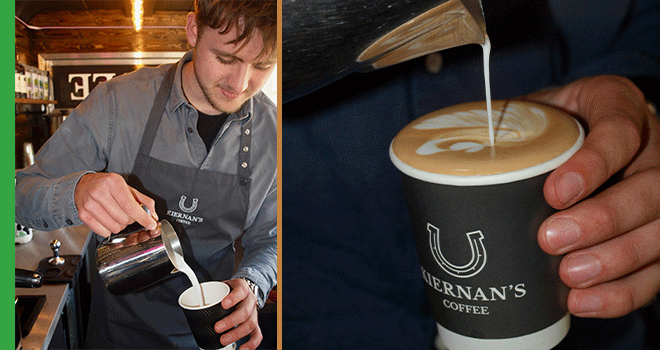
What do you think your younger self underestimated most about running a hospitality business?
Two years on from launching Kiernan’s Coffee at 19, with no background in business and not even having drunk coffee before starting, I think I most underestimated just how continuous the learning process would be, and how much of the role is shaped through real experiences. Over time, I’ve become much clearer on playing to my strengths and building systems that suit the way we operate, rather than forcing approaches that don’t fit. Looking back, the biggest shift has been realising that the hardest part is always the initial decision to go for it in the first place, and everything that follows is about experience, reflection, and steady growth.
You spoke a lot about perseverance in the early days. Was there a moment in the last two years where you seriously questioned continuing?
There have definitely been moments over the last two years where I’ve questioned whether to continue. In hospitality, you are so exposed to factors you can’t control, and there have been days with poor weather where no one comes out, or pitches that haven’t worked and we’ve served very few customers at all. In those moments, it is easy to question everything and wonder if it’s worth it. What has always pulled me through is taking a step back and looking at the bigger picture, as well as the consistency of support from our regular customers and the progress we’ve built over time. Those tough days are part of the reality of the business, but they also make the better days mean even more.
What has surprised you most about yourself as a business owner?
How much I’ve had to learn from scratch. When I started, I had no background in business and no experience running a coffee operation at all, so everything has been learned along the way. I’m now involved in everything from stock control, event planning and staff management to serving, coffee making, accounting, VAT, admin and scheduling. It’s been a constant learning process, and it’s surprised me how quickly you can adapt and take on responsibilities you never imagined doing at the start.
Back then, your goal was to secure more consistent year-round work. How has the business evolved since then?
Securing consistent year-round work was definitely one of our biggest challenges in the early days. Since then, the business has evolved significantly, and we now have one unit permanently based at a National Trust property, which has provided a much more stable foundation. We’re incredibly grateful for their support, as it has helped strengthen both our reputation and visibility. Having access to an established visitor base means we no longer have to work as hard to attract customers, as many National Trust members and visitors are already on site, allowing us to focus more on delivering a great experience and high-quality products.
Has the seasonality of the business changed, or is that still one of the biggest operational challenges?
Seasonality remains one of the most significant operational challenges within our business. Due to the fluctuating nature of demand throughout the year, scheduling and maintaining staff has become our hardest challenge. This often results in the need for a rotating workforce, and during quieter seasons it can be difficult to provide team members with a consistent number of shifts.
Have your long-term ambitions changed at all?
The ambitions have definitely grown, especially now we have the second horsebox, which has been a massive step forward for the business. I am not massively focused on opening a cafe. I am very open minded, but I actually think the mobile trading makes far more sense for us. With a cafe, you are dealing with huge overheads like rent and rates, and you are relying on customers coming to you every day. What I love about the mobile trading is that we go directly to the customers. Whether that is events, venues or sites like the National Trust, you are serving a captive audience and operating with far lower risk at the same time.
It is also brilliant from a promotional perspective because every event puts the business in front of completely new people. One weekend you could be at a private wedding, the next at a public event or a busy venue, and every single booking helps grow the brand and customer base naturally – something you wouldn’t get with a stationary cafe.
In the first interview, you mentioned learning through mistakes, from frozen water filters to insurance issues. What’s been your biggest lesson in year two?
Our biggest lesson in year two has been the importance of consistency, preparation and planning ahead. Early on, we were very reactive and learned things the hard way through unexpected issues, but now we are far more structured in how we operate. We make sure we are better prepared for different conditions, have stronger systems in place, and think further ahead in terms of stock, equipment and logistics. Overall, we’ve learned that the more organised and proactive we are, the smoother everything runs, which ultimately protects both the customer experience and the business as a whole.
What operational skill do you think independent hospitality businesses often overlook in the beginning?
One operational skill independent hospitality businesses often underestimate at the beginning is forward planning and systems discipline. It is easy to focus entirely on day-to-day service and product quality, but without structured preparation around stock control, forecasting, and set routines, small inefficiencies quickly compound. We have learned that having clear processes for ordering, setup, and service flow makes a significant difference, particularly in a mobile environment where conditions change constantly. Strong organisation behind the scenes ultimately protects consistency in the customer experience and allows the business to operate smoothly under pressure.
What do you know now that would have saved you the most stress in your first six months?
Looking back, what would have saved me the most stress in the first six months is simply accepting how much there was to learn. I started the business at 19 with no prior experience in business and no background in coffee, so everything came from first-hand experience. At the time, that made challenges feel more overwhelming than they really were. What I’ve realised since is that you learn something new every single day, and you never really stop learning. Once I understood that, it became much easier to take things in my stride and grow into the role over time.
Have rising costs and economic pressures changed the way you run the business or price your products?
Rising costs have definitely changed the way we run the business. We’ve seen increases across almost every area, from coffee, milk and food ingredients to fuel, packaging and equipment costs. While we’ve had to adjust our pricing over time to reflect those rising costs, we’ve been careful to ensure those changes remain fair and represent good value for customers. At the same time, we’ve become much more focused on efficiency, supplier relationships and reducing waste, so we’re protecting our margins without compromising on quality. The goal has always been to maintain a sustainable business while continuing to deliver the high standards our customers expect.
You described the hospitality industry as “collaboration over competition.” Does that still ring true two years later?
The idea of “collaboration over competition” still very much holds true today, and if anything, it has become even more evident over the past two years. I have built strong relationships with many other food traders, cafés, and event organisers, many of whom have become genuine friends. There is a real sense within the industry that we are all in it together, and that supporting one another ultimately benefits everyone involved, both in terms of the customer experience and the strength of the wider hospitality community.
Are there any collaborations, partnerships or friendships that have had a particularly big impact on your journey?
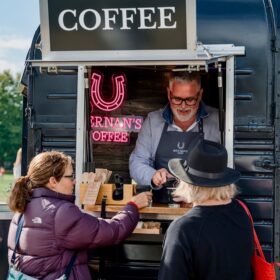
A key partnership that has had a significant impact on our journey is our relationship with the National Trust. Being based at one of their sites has provided us with a stable and supportive environment, as well as introducing us to a consistent flow of visitors who have really helped us grow. It has also strengthened our brand reputation and given us a platform that aligns well with our values of quality and experience. Beyond that, many of the most meaningful impacts have come from the friendships we’ve built with other traders, organisers, and customers along the way, which continue to shape and support our business day to day.
What do you think keeps customers coming back to Kiernan’s Coffee?
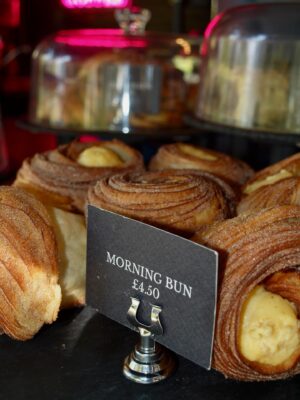
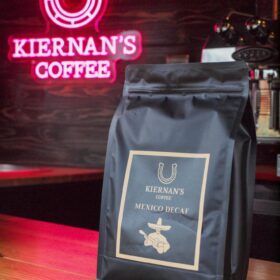
I think there are two main reasons customers keep coming back: the quality of our products and the relationships we’ve built with customers over the past two years. We’re fortunate to have customers who regularly tell us they come to Wimpole Estate specifically for a coffee and a morning bun before work, rather than simply stopping by because they’re already there. We’ve even started selling our own branded coffee bags because so many customers wanted to enjoy our coffee at home as well.
Just as importantly, we’re a family-run business, and I think people genuinely connect with that. We have a lot of regular customers whose orders we know by heart, and we’ve built real friendships through the business. Many customers ask whether certain family members are working that day so they can stop for a chat and say hello. That personal connection is something that’s becoming increasingly rare, and I think it helps people feel like they’re part of the Kiernan’s Coffee family too.
Has your brand identity changed or matured since the rebrand in your early months?
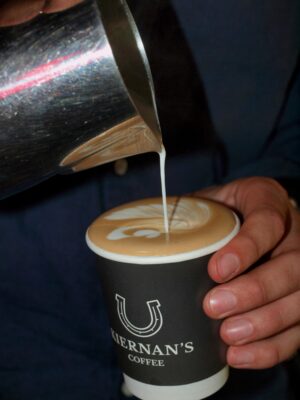
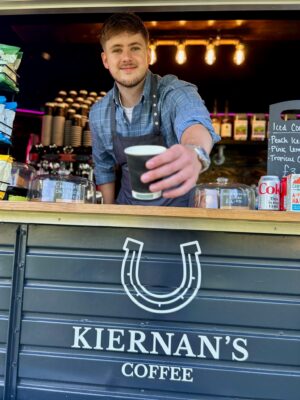
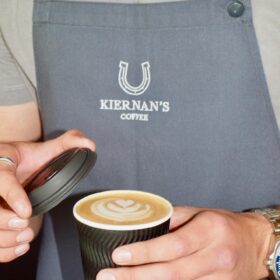
Yes, our brand identity has matured significantly since the early months. Using our family name is now central to the business, reflecting how involved we all are and helping us build a more personal connection with customers. Our branding, including things like our cups and branded coffee bags, has also helped strengthen recognition, while our two horseboxes give us a distinctive and memorable presence compared to more traditional setups.
Being mobile across different events and locations further supports this, as it allows us to consistently get our name in front of new and returning customers, helping the brand feel more established and confident.
What’s been the proudest customer interaction or piece of feedback you’ve received?
We are lucky to receive positive feedback like this on a daily basis, so it is difficult to single out one proudest moment. What stands out most is the consistency of comments from customers who take the time out of their day to tell us how much they enjoy what we do and how we have impacted their experience. We really value that feedback, as it is a genuine reflection of the relationships we build and the effort we put into every interaction, and it never fails to make our day.
What does success mean to you now compared to when you first launched?
At the beginning, success was just proving the business could work. Now, success is seeing people genuinely enjoy what we do. It is great hearing from customers who recognise us at different events, come specially to events to see us, or even drive to the National Trust just to buy a coffee and a morning bun before driving off to work. That is probably the biggest sign to me that the business is doing something right.
If you could give one piece of advice specifically to young entrepreneurs entering hospitality, what would it be?
My main piece of advice to young entrepreneurs entering hospitality would be that the hardest jump is always the first decision to start. After that, the rest is trial and error, and figuring out what actually works for you in practice. I began the business at 19 with no prior experience in business or coffee, so everything had to be learned from scratch. What I quickly realised is that what works for other people does not always work for you, so it is important to play to your own strengths, ask yourself why something didn’t work, and adjust accordingly. If you keep building, stay curious, don’t give up, and don’t stop learning, you will naturally grow over time.
 Featured Training
OUR MEMBERSHIP
We're here to help make your catering business a success. Whether that be starting up or getting on top of your compliance and marketing. We're here to help you succeed.
Want our latest content?
Subscribe to our mailing list and get weekly insights, resources and articles for free
Get the emails