



A Food Safety Management System (FSMS) is an essential toolkit for any food business. It helps ensure food is safe to eat, staff are working safely, and the business remains legally compliant. Whether you run a small street food stall or a growing catering operation, your FSMS is central to protecting customers, staff, and your reputation.
NCASS provides both paper-based and digital systems as part of membership, yet many businesses still stick with paper simply because it feels familiar or they’re unaware of the benefits digital systems can bring.
This article compares both approaches, including the pros and cons of each.
What is a Food Safety Management System?
A Food Safety Management System (FSMS) is a structured approach to controlling food safety hazards in a food business. It includes procedures, monitoring, documentation, and corrective actions designed to ensure food is safe for consumption.
In practice, an FSMS helps businesses:
- Identify and control food safety risks (hazard analysis)
- Monitor critical processes like temperature control and cleaning
- Record checks and corrective actions
- Demonstrate legal compliance during inspections
- Continuously improve food safety standards
It’s not just paperwork, it’s a legal requirement and a core part of running a responsible food business.
Pros of Paper-Based Systems
Paper systems rely on manual record-keeping such as printed checklists, logbooks, and handwritten temperature or cleaning records.
Simple and familiar
Most staff already understand how to fill in paper logs with minimal training.
Low initial cost
No software, devices, or subscriptions are required.
No reliance on technology
Works without internet access, devices, or charging-useful for outdoor or mobile catering.
Tangible records
Physical paperwork can be stored in folders and presented easily during inspections.
Suitable for very small businesses
For micro-operations with limited processes, paper can feel straightforward and manageable.
Cons of Paper-Based Systems
Time-consuming
Manual completion and filing take more time day-to-day.
Higher risk of human error
Missing signatures, incorrect entries, or lost paperwork are common issues.
Hard to track trends
Identifying recurring issues (like repeated temperature failures) is difficult.
Limited visibility for managers
No real-time oversight if multiple staff or sites are involved.
Storage and organisation issues
Paper records can become bulky, disorganised, or damaged over time.
Pros of Digital Food Safety Systems
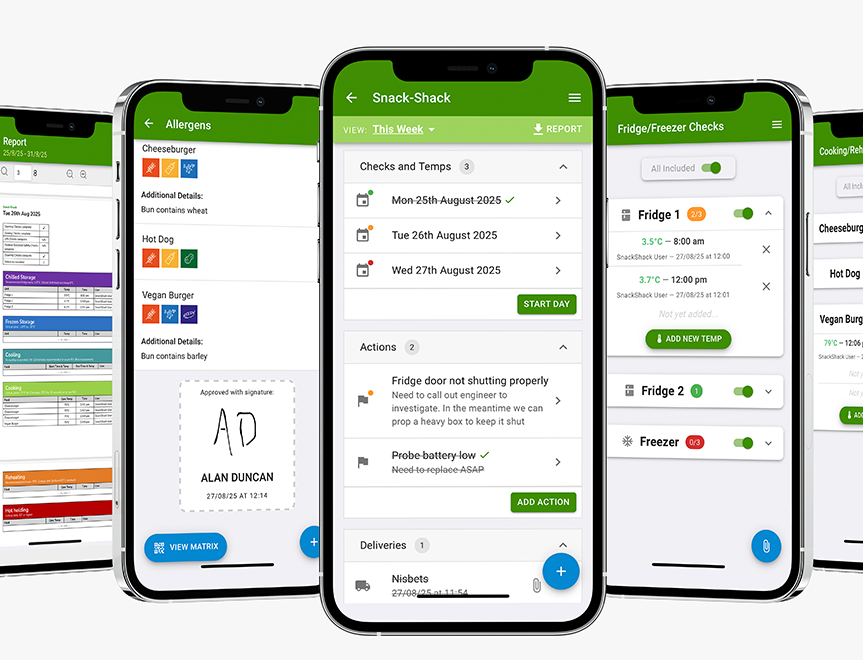
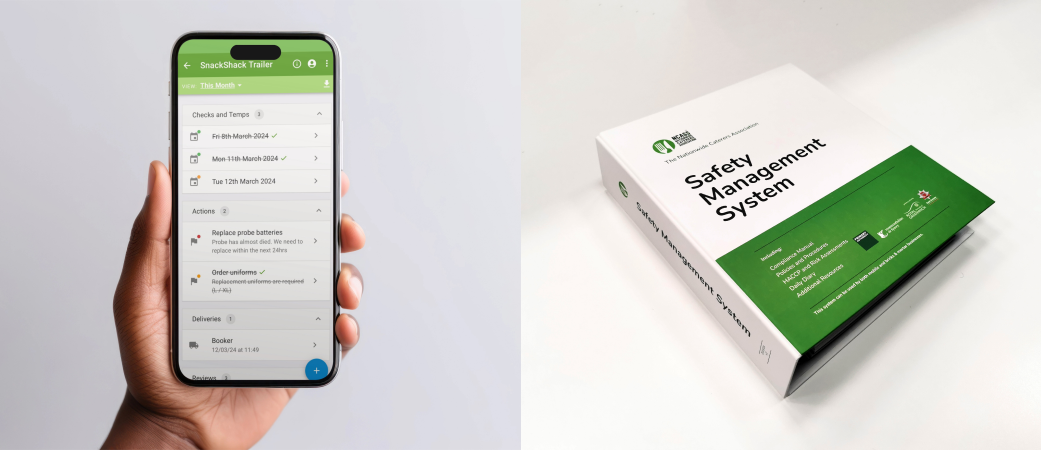
Digital systems use software to record, manage, and monitor food safety processes on devices such as phones, tablets, or computers. For example, NCASS members can access a Digital Safety Management System (DSMS) designed specifically for independent food businesses.
Real-time recording and access
Data is recorded instantly and can be accessed anywhere, anytime.
Automated reminders and alerts
Helps ensure tasks like temperature checks and cleaning schedules are not missed.
Faster inspections and audits
Records are organised and can be shared quickly with Environmental Health Officers.
Better reporting and insights
Digital systems make it easier to identify trends and recurring issues.
Improved communication and accountability
Tasks can be assigned to staff, with corrective actions clearly tracked.
Scalable for growth
Works easily whether you have one site or multiple locations.
Reduced paperwork burden
Removes the need for printing, filing, and storing physical documents.
Cons of Digital Systems
Requires basic tech confidence
Staff may need time to get used to apps or software.
Dependence on devices
Needs access to a phone, tablet, or computer.
Possible connectivity issues
Some systems rely on internet access for full functionality.
Initial learning curve
Even user-friendly systems require some onboarding and setup.
Perception of complexity
Some businesses assume digital systems are more complicated than they actually are.
In summary
Many small food businesses continue using paper because it feels simpler and more familiar, staff are used to it, or there is simply a resistance to changing systems; why fix what’s not broken after all? However, this can lead to unnecessary admin workload and missed opportunities to streamline compliance.
NCASS provides both paper-based and digital Food Safety Management Systems as part of membership, designed specifically for small and independent food businesses.
Both systems are:
- Easy to use with minimal training
- Designed for compliance with UK food safety regulations
- Scalable as businesses grow
- Supported with ongoing guidance and resources
The Digital Safety Management System also includes:
- Digital checklists and monitoring tools
- Task allocation and corrective action tracking
- Temperature, cleaning, allergen, and delivery management
- A full digital compliance manual
These features help reduce admin time while improving consistency and traceability.
Both paper and digital FSMS options can keep a business compliant and food safe when used correctly.
Paper systems offer simplicity and low-tech reliability, making them suitable for very small operations. However, they come with limitations in efficiency, accuracy, and scalability.
Digital systems require a small adjustment period but offer significant long-term benefits, especially for businesses wanting to save time, improve organisation, and grow with confidence. For many operators, the choice isn’t just about compliance, it’s about how efficiently they want to run their business day to day.
Find out more about our Digital Safety Management System and how it can benefit your business.
More information about our Food Safety Management Systems can also be found here.

 Featured Training
OUR MEMBERSHIP
We're here to help make your catering business a success. Whether that be starting up or getting on top of your compliance and marketing. We're here to help you succeed.
Want our latest content?
Subscribe to our mailing list and get weekly insights, resources and articles for free
Get the emails