





If you’ve ever found yourself thinking, “I didn’t get into catering to write disclaimers and fill out forms,” – you are not alone.
You got into this because you’re good at what you do. You know food, service, and customer experience. You thrive on the buzz of the job, not the paperwork.
But here’s the reality: running a food business today means protecting what you’ve built. And the businesses that survive long-term aren’t just the ones with the best menu — they’re the ones that manage risk well.
December is the best time to deal with this. The events slow down, the calendar opens up a little, and you’ve got space to sort the “winter jobs”, the ones that protect you when things go wrong (which, eventually, they will).
Let’s talk about risk – without the corporate nonsense
Risk isn’t about being afraid. It’s about being sensible. It’s about stopping small issues from becoming big problems. And it’s about making sure that if someone trips, spills, burns, or blames you, you’re not left scrambling for proof or panicking because your team “didn’t know what to do.”
Start with these simple but powerful fixes:
1. Use disclaimers — even for the obvious stuff. Yes, everyone knows tea is hot. But unless you have a sign that says it, you can’t prove you warned them.
Put up clear notices like:
“Caution: Tea and coffee are hot.” “Please notify us of any allergies before ordering.”
It’s not about avoiding blame; it’s about setting expectations.
2. Make sure your first aid kit isn’t just for show. It should be stocked, easy to find, and everyone should know how to use it. Even basic first aid can make a huge difference – and in a claim, it shows you acted responsibly.
3. Get accident reports and statements the same day. When something goes wrong, record it immediately. Get witness statements before people forget, or worse, leave. You’d be amazed at how fuzzy things get a few months later when a solicitor sends you a letter and your Saturday staff don’t work there anymore.
4. Update your risk assessments. You’re not a static business. If you’ve added new kit, changed the layout, or switched power sources, your paperwork needs to reflect that. Risk assessments aren’t just a formality. Done well, they protect your team, your customers, and your reputation.
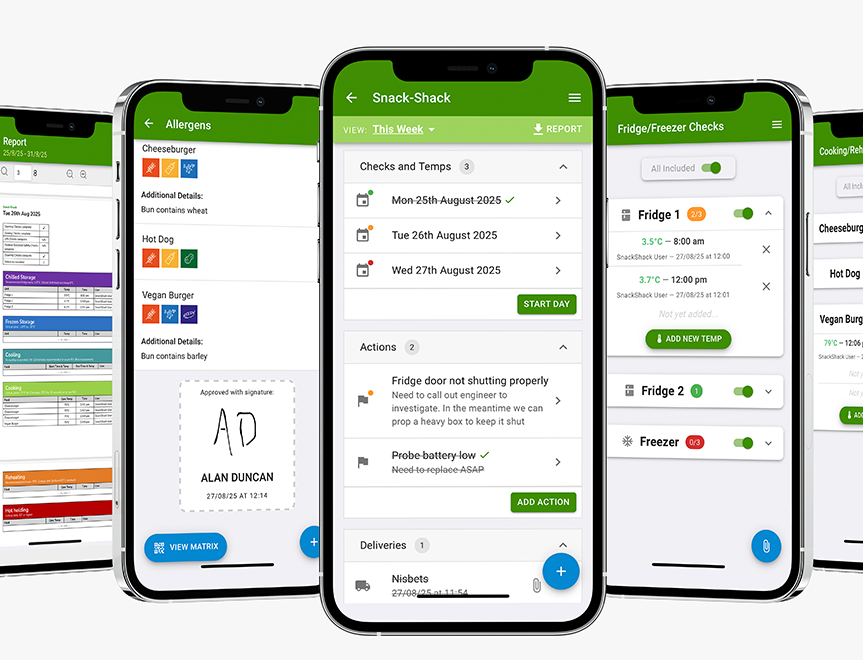
Remember NCASS have included within the SMS an Accident Investigation Record Form to help you record important details, structure an investigation following accident and to evaluate the finding to prevent a re-occurrence.
Remember to review and update your food safety, H&S and fire risk assessments whenever there are changes to the business, and make sure what is written down reflects real life. To check your risk assessments, log into the NCASS risk assessment tools via the Member Dashboard.
Further copies can be downloaded from the Additional Resources’ area of the NCASS website. These records can prove useful in the event of an insurance claim.
Running a catering business is more than cooking – it’s operating like a pro
You wouldn’t serve food without checking that the fridge is cold. So why run your business without checking that your systems are solid?
- Are you legally covered if a customer gets injured?
- Is your staff trained to respond in an emergency?
- Could you prove you warned someone about an allergen?
If you’re unsure, now’s the time to sort it, not when you’re knee-deep in bookings or answering a claim.
We can help with that
We’re offering NCASS members a free 30-minute telephone consultation – to discuss your disclaimers, procedures, terms and risk assessments.
Need more hands-on help?
- Document reviews from £20
- Risk & compliance advice from £50
- One-off legal support from £495
Drop us a message. Let’s get your business risk ready for 2026!
0118 321 4188

 Featured Training
OUR MEMBERSHIP
We're here to help make your catering business a success. Whether that be starting up or getting on top of your compliance and marketing. We're here to help you succeed.
Want our latest content?
Subscribe to our mailing list and get weekly insights, resources and articles for free
Get the emails