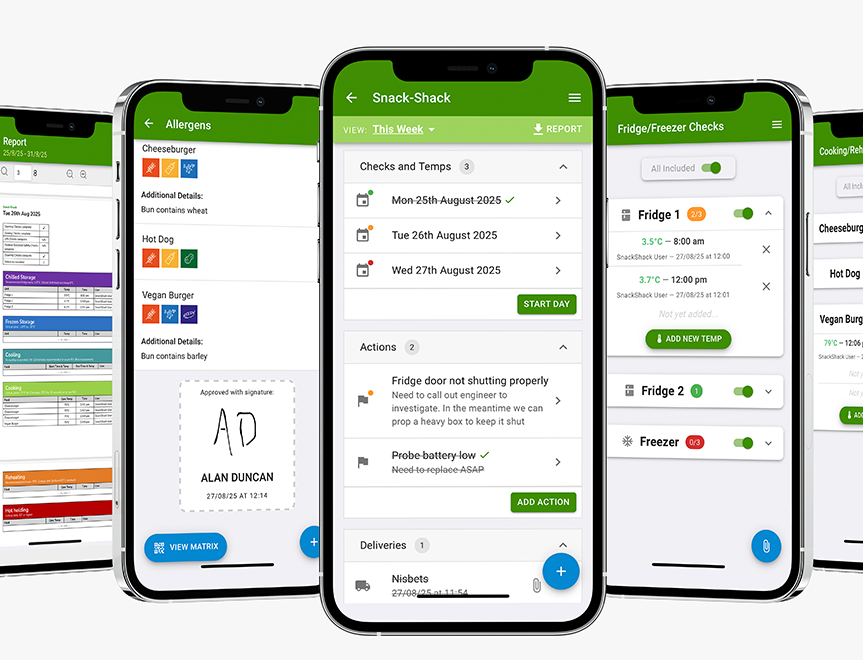
Digital Food Safety System
Save time, reduce hassle and keep your business inspection-ready.

The real opportunity lies in turning first-time visitors into regulars who return time and again, recommend your business to others and become advocates for your brand.
The good news is that building loyalty doesn’t always require expensive discounts or complex reward schemes. Often, it’s the simple things that have the biggest impact: staying in touch with your customers, creating memorable experiences and making people feel valued.
In this guide, we’ll explore:
Whether you’re running a pub, café, restaurant or street food business, these practical strategies can help you build a loyal customer base and keep people coming back for more.

Thinking of starting a business? Answer a few questions that will help us support you and others in your position going forward.
When someone joins your email list, they’ve already shown interest. They’ve visited before, signed up on your website, or opted in at some point because they liked what you offer. That means your emails aren’t interrupting, they’re reminders.
A short message at the right time can be enough to turn “we should go out this week” into “let’s go there.”
One of the ways that makes email less effective than it could be is by over-explaining.
Most hospitality emails work best when they’re:
✔ one idea
✔ a few sentences
✔ easy to scan on a phone
People aren’t sitting down to read a newsletter. They’re quickly checking their inbox. If they understand the message in a few seconds, you’re doing it right.
The tone matters more than the design. Emails that sound like announcements or adverts tend to get ignored. Emails that feel like simple updates tend to get read.
For example:
Instead of “Exclusive Limited-Time Promotional Offer,” use something like “New menu this week,” or “Quiz night is back on Thursday.” It’s the same message, just more natural.
When you send the email is just as important as what it says.
A few simple guidelines:
✔ send lunch ideas late morning
✔ send weekend plans midweek
✔ send event reminders a few days before
You’re trying to arrive at the moment someone is thinking about what to do.
That might be:
✔ book a table
✔ reserve a place
✔ visit during a certain time
Keep it clear and easy. The fewer steps, the better.
Most hospitality emails aimed at bringing back previous customers fall into a few repeatable types.
Here are three you can come back to whenever you need them.
Subject: Midweek Lunch This Week
Hi [Name],
If you’re looking for a relaxed lunch this week, we’ve got a quieter few days ahead!
Join us from Tuesday to Thursday for [brief offer or highlight].
We’re open from [time], and booking is available if you’d like to plan ahead.
Call to action: Book a table
Subject: Live Music This Saturday
Hi [Name],
We’ve got live music this Saturday evening and it’s always a good atmosphere!
The music starts at [time], and the kitchen will be open as usual with [highlight menu special here].
If you’re planning to come along, it’s worth booking a table in advance.
Call to action: Reserve now
Subject: A Good Day to Visit
Hi [Name],
It’s looking like a slightly quieter few days here, which makes it a great time to drop in.
If you’re after a relaxed coffee, lunch or catch-up, we’ve got plenty of space.
We’re open from [time] – feel free to book or just walk in!
Call to actions: Book now/Get directions/ Website homepage
You don’t need to email constantly. For most venues, something like once a week, or even once every couple of weeks, is enough to stay in people’s minds. The key is sending emails when you actually have
something worth saying, not just because you feel like you should.
Email works because it’s direct and familiar. It keeps your venue in mind without relying on algorithms or timing posts perfectly. A simple message, sent at the right moment, often does more than a lot of complicated marketing.

Subscribe to our mailing list and get weekly insights, resources and articles for free
Collecting guest data (without annoying them!) can feel like a delicate balance in hospitality.
While staying in touch with customers is valuable, asking for personal
information in the wrong way can feel intrusive and put people off.
The good news is that most guests are happy to share their details when there’s a clear benefit and the process feels natural. The key is to keep it simple, relevant and easy for them to understand why you’re asking.
While a social media follower might see your content occasionally, and a website visitor might browse your menu and then leave without returning, a guest whose details you have collected is someone you can reach out to directly, without relying on algorithms, timing, or chance.
That means you have the ability to send a message that lands straight in their inbox, whether that’s an invitation to come back, a reminder about an upcoming event, or simply a small update that keeps your venue in mind for when they’re deciding where to go next.
In simple terms, it gives you a way to stay connected with your customers, rather than hoping they find you again on their own.
The most common mistake is in the way data is asked for, because if the process feels too long, too complicated, people will either abandon it halfway through or not engage with it at all.
Guests don’t want to fill out lengthy forms just to book a table or enjoy a coffee, and if it feels like a task rather than a quick step, they’re unlikely to go ahead. So instead of thinking about how much information you can collect, step back and ask yourself:
“What’s the smallest amount of information we actually need to make this worthwhile?”
The most effective way to collect guest data is to make it feel like a natural part of something the guest is already doing, rather than something that interrupts their experience or requires them to think too much.
For hospitality venues, posts work best when they show something real: It might sit within a booking process they’re already completing, or appear when
they connect to your Wi-Fi, or even come up as an option at the end of a visit when they’re paying or about to leave. When it fits into an existing action like that, it feels less like a request and more like a standard step, which makes people far more likely to engage with it without hesitation.
People are far more comfortable sharing their details when they understand what they’ll get in return, and while that doesn’t necessarily mean offering constant discounts or incentives, it does mean being clear about
why you’re asking.
Maybe they’ll updates about events, early access to bookings, occasional offers, or simply news about what’s happening at your venue, but whatever it is, it should be easy to understand and clearly communicated.
When guests know what to expect and feel like there’s something worthwhile on the other side, they’re much more likely to say yes.
One of the easiest ways to improve your response rate is to reduce how much you’re asking for, because the more fields someone has to fill in, the more likely they are to stop halfway through or decide it’s not worth the effort.
In most cases, you really only need a name and an email address, and while there may be situations where you want to collect slightly more information, keeping it as simple as possible will almost always lead to better results.
You don’t need anything overly complex to start building a useful guest list, as there are several simple ways to gather details that can fit naturally into the natural flow of your business.
Booking forms are an obvious starting point, since guests are already committing to a visit and more likely to engage with a short, simple prompt, while Wi-Fi signups offer another easy opportunity, particularly for guests who are already expecting to connect their devices.
Digital menus or QR codes can also work well, especially when people are using their phones during their visit, and subtle prompts in the venue itself, such as a table sign or a note at the till, can remind guests that they have the option to stay connected.
Once someone has shared their details, it’s important to be clear about what will happen next, because this is where trust is either built or lost, and keep you compliant with GDPR law.
Letting guests know how often you’ll contact them, what kind of messages they’ll receive, and reassuring them that they can unsubscribe at any time helps create confidence and makes the whole process feel more transparent and respectful. When people feel informed, they’re far more likely to stay subscribed and engage with your messages over time.
Before collecting any personal data, it’s important to understand General Data Protection Regulations (GDPR).
In simple terms, GDPR is the law that governs how businesses collect, store and use people’s personal information. It requires you to be transparent about what data you’re collecting, why you’re collecting it, and how you’ll use it.
The reality is, most customers don’t come back because of a scheme, but because of how a place makes them feel.
The good news is that many of the things that build that feeling don’t cost anything at all. They’re small, thoughtful touches that show guests they’re recognised, appreciated, and welcome – and over time, those small moments are often what turn a one-off visit into a regular habit.
Discounts can bring people in once, but they don’t always build long-term loyalty The reality is, most customers don’t come back because of a scheme, but because of how a place makes them feel. The good news is that many of the things that build that feeling don’t cost anything at all. They’re small, thoughtful touches that show guests they’re recognised, appreciated, and welcome – and over time, those small moments are often what turn a one-off visit into a regular habit.

One of the simplest and most effective things you can do is remember people Not in a formal or forced way, but in small, natural details:
✔ recognising a face
✔ remembering a usual order
✔ greeting someone by name
✔ Even something as simple as “The usual?” can go a long way.
Regular guests don’t necessarily expect special treatment, but they do notice when they’re looked after.
That might mean:
✔ fitting them in when you’re busy
✔ giving them a preferred table if possible
✔ letting them know about availability before others
These small decisions don’t cost anything, but they show that loyalty is recognised. It shows that the guest isn’t just another transaction, but someone
you’ve noticed and remembered.
These don’t need to be frequent or expensive to have an impact.
A small gesture at the right moment such as a complimentary coffee, a side, or a dessert can completely change how someone feels about their visit. It works best when it feels unexpected and personal, rather than part of a structured offer.
It’s less about the value of what’s given, and more about the thought behind it.
Sometimes loyalty is as simple as saying thank you, properly.
That could be:
✔ a genuine conversation at the end of a visit
✔ recognising how often someone comes in
✔ a quick “good to see you again”
These moments don’t take long, but they reinforce the relationship between the guest and the venue. People remember places where they feel appreciated.
Consistency is often overlooked, but it’s one of the strongest drivers of repeat visits.
Guests return because they know what to expect:
✔ the food will be good
✔ the service will feel welcoming
✔ the atmosphere will be right: music, décor, the people
If that experience varies too much, people hesitate. If it stays consistent, they come back without thinking twice. Reliability builds trust, and trust builds loyalty.
By regularly sharing updates, behind the- scenes content, new menu items, events and everyday moments from your business, you can build a genuine connection with your customers and keep your brand front of mind between visits.
The goal isn’t just to promote what you’re selling, but to create a sense of community. Respond to comments, share customer photos, celebrate milestones and let people get to know the personalities behind the business.
When customers feel connected to your story, they’re more likely to return recommend you to others and become loyal supporters. Consistency matters more than perfection. A regular presence on social media can help turn one-time visitors into long-term customers without relying on discounts or special offers.
Your website should work around your business – not the other way around.
Make sure you understand:
✔ Who owns the domain and hosting
✔ Whether you have full admin access
✔ What happens if you stop working with the agency
✔ What you can update yourself
Most hospitality businesses experience those slow, weekday evenings; the ones where tables are available, staff are prepped for service, but there’s not quite enough bookings to create a real atmosphere.
While many managers accept those quieter nights as part of the routine, they’re actually an opportunity.
With the right approach, an uneventful evening can become something guests actively look forward to – not because of heavy discounts, but because it feels a bit more special than a standard visit. This is where a simple ‘VIP night’ can work well.
Despite the name, it doesn’t need to be complicated or exclusive in a formal sense. A VIP night is simply a slightly elevated version of your usual offering, aimed at people who already like your venue.
It might include:
✔ a small added extra
✔ early access to something new
✔ a limited menu or experience
✔ a quieter, more relaxed atmosphere
The key is that it feels intentional and a little different, without creating extra pressure on the team.
The first step is choosing when to run it. Look for a naturally quieter slot:
✔ a Tuesday or Wednesday evening
✔ a gap between busier trading periods
✔ a night where bookings tend to be unpredictable
✔ a music or specific activity event
You’re not trying to compete with your busiest days. You’re giving people a reason to choose a quieter one.
These don’t need to be frequent or expensive to have an impact.
A small gesture at the right moment such as a complimentary coffee, a side, or a dessert can completely change how someone feels about their visit. It works best when it feels unexpected and personal, rather than part of a structured offer.
It’s less about the value of what’s given, and more about the thought behind it.
The biggest mistake is trying to do too much. A VIP night doesn’t need a full redesign of your menu or service. In fact, it works best when it builds on what you already do.
Some simple ideas:
✔ a set or taster menu using dishes you already serve
✔ a complimentary drink or small extra on arrival
✔ early access to a new menu
✔ a themed version of your usual offering (think tapas evening or mid-week roast)
The goal isn’t to add cost, it’s to add a sense of occasion.
How you present the event matters. If it feels like a promotion, it can get ignored. If it feels like an invitation, people are more likely to respond.
Keep the messaging simple and direct:
“We’re hosting a small evening for regulars…”
“A quieter midweek night with a few extras…”
“An early look at something new…”
You’re not trying to fill every seat instantly. You’re creating interest and curiosity.
Promotion doesn’t need to be complicated, but it does need to be visible.
A simple approach works well:
✔ send a short email to your list
✔ post a couple of reminders on social media
✔ share updates in Stories as the date approaches
Email works well for reaching people directly, while social media helps reinforce the message. You don’t need a full campaign, just a few clear reminders.
A VIP night should feel easier, not harder.
That means:
✔ keeping the menu simple
✔ avoiding anything that slows down service
✔ working within your existing setup
If it becomes complicated to run, it’s unlikely to be repeated. But if it’s simple and enjoyable, it can become something you do regularly.
We're here to help make your catering business a success. Whether that be starting up or getting on top of your compliance and marketing. We're here to help you succeed.
Find out more Request a call back

 Featured Training