
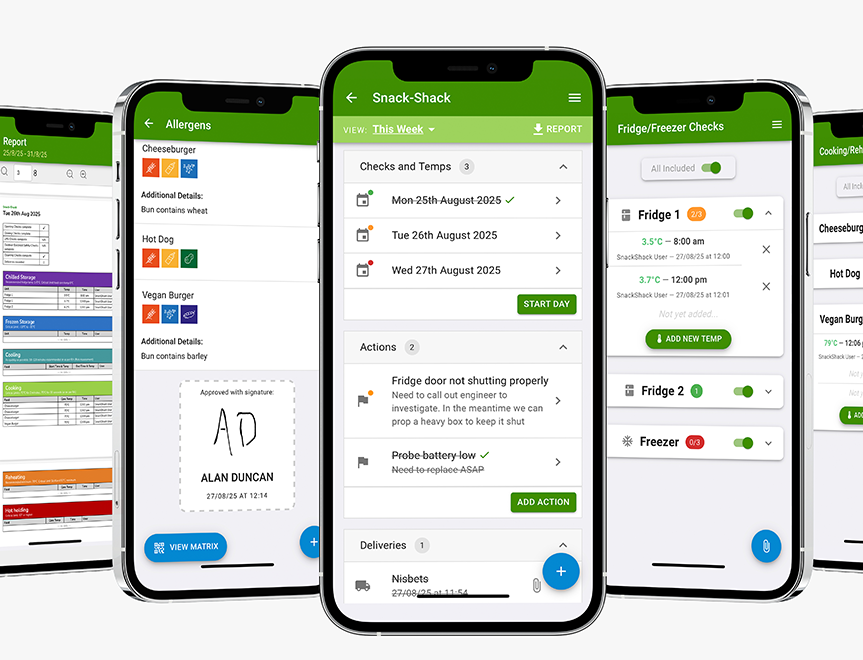
Digital Food Safety System
Save time, reduce hassle and keep your business inspection-ready.

Starting a street food business in the UK is an exciting move, but before you fire up your grill or park your food truck, you need to make sure you’re trading legally. A street food trading licence is one of the most important steps to get right from day one.
Without the proper permits and registrations in place, you risk fines, forced closure, and damage to your reputation before your business even gets off the ground. This guide walks you through everything you need to know about street food trading licence requirements in the UK, so you can start trading with confidence.
Thinking of starting a business? Answer a few questions that will help us support you and others in your position going forward.
A street trading licence is just one part of the legal requirements for running a street food business. It gives you permission to trade from a specific location, but it doesn’t replace your other obligations. If you’re selling food, you’ll still need to register your food business with the local authority and comply with food safety and hygiene requirements.
It’s also important to remember that street trading permissions are usually location-specific. If you trade in more than one council area, or at multiple sites that each require consent, you may need separate licences or consents for each location.
Most street trading licences are also time-limited and will need to be renewed periodically.
Think of it as one piece of the compliance puzzle, alongside the other licences, registrations and permissions that may apply to your business.
The rules vary significantly depending on where you operate in the UK. Each local council sets its own fees, conditions, and application processes. What applies in Manchester may differ from what’s required in Bristol or Edinburgh. That’s why it’s always best to contact your specific local authority early in the process.

Subscribe to our mailing list and get weekly insights, resources and articles for free
Not every food business that operates outdoors automatically needs street trading consent. The type of consent you need depends on where and how you trade. If you’re setting up on a public street, pavement, or road, street trading consent from your local council is almost certainly required. If you’re trading on private land with the landowner’s permission, a formal street trading consent may not be necessary, although other permits still apply.
The key distinction is between mobile trading and fixed pitch trading. Mobile traders who move between different public locations regularly will have different requirements from vendors who operate from a permanent spot at a market or town centre. Both types of trading are common in the UK street food scene, and both come with their own set of rules.
If you run a mobile food unit, such as a vehicle, trailer or gazebo and you move between different locations, you’ll typically need a street trading licence for each local authority area where you operate.
You can’t use a single licence across the whole UK. Each council treats applications independently, so if you plan to trade across several areas, be prepared to apply multiple times and pay separate fees.
Mobile food traders also need to ensure their vehicle or unit meets specific safety standards, particularly around gas and electrical equipment. A Gas Safe certificate is required if you use LPG, along with an Electrical Installation Condition Report (EICR) or equivalent evidence that the electrical systems are safe.
Your vehicle will also need to comply with road traffic regulations. It’s a lot to manage, but getting organised early makes the process much smoother.
If you always trade from the same spot, such as a regular market stall or a designated pitch in a town centre, your licence will be tied to that specific location. Many local councils issue fixed pitch consents that name the exact street or area where you’re permitted to trade. These can sometimes offer more stability because you’re not reapplying for different areas, but they also limit your flexibility.
Market operators sometimes handle licensing on behalf of their traders, so if you’re joining an established market, the licensing requirements may be different. Some markets operate under statutory market rights or other local arrangements that exempt traders from the need to obtain a separate street trading licence. However, requirements vary between locations, so always check with the market organiser and local authority to confirm what permissions are needed before trading.

Applying for a street food trading consent in the UK means going through your local council. There is no national application system, so the process differs depending on where you want to trade. That said, most councils follow a broadly similar process.
Start by identifying the local authority responsible for the area where you want to trade. Visit their website and look for the licensing or street trading section. Most councils now accept online applications, though some still require paper forms. Before submitting anything, make sure you have all the required documentation ready, as incomplete applications are one of the most common reasons for delays.
When applying for a street trading licence, you’ll typically need to provide the following:
Some councils may ask for additional documents, such as a risk assessment or evidence of employer’s liability insurance if you have staff. Always check the specific requirements on your council’s website before applying.
The cost of a street trading consent varies considerably across different UK councils.
As a general guide, you can expect to pay anywhere between £200 and £1,000 per year, depending on your location, the type of trading, and whether you’re applying for a new licence or renewing an existing one. Some councils charge lower fees for part-year trading or specific pitch types, so it’s always worth asking.
Processing times also vary. Most councils aim to process applications within 4 to 8 weeks, but some may take longer, especially during busy periods or if your application requires further review. Apply well in advance of your intended start date to avoid frustrating delays. Some temporary or one-off consents may be processed more quickly, but permanent licences typically take longer.
Having a street trading consent gives you the legal right to occupy a space, but it doesn’t cover your food safety obligations.
Every street food trader in the UK must meet separate food safety and hygiene requirements set out by the Food Standards Agency (FSA) and enforced by local environmental health officers.
Food safety compliance covers everything from how you store and prepare food to how you handle allergens and manage waste. Regular inspections from the local authority can happen at any time once you start trading. Your food hygiene rating, which is publicly displayed under the Food Hygiene Rating Scheme, can directly impact customer trust and your ability to trade at certain events or markets.
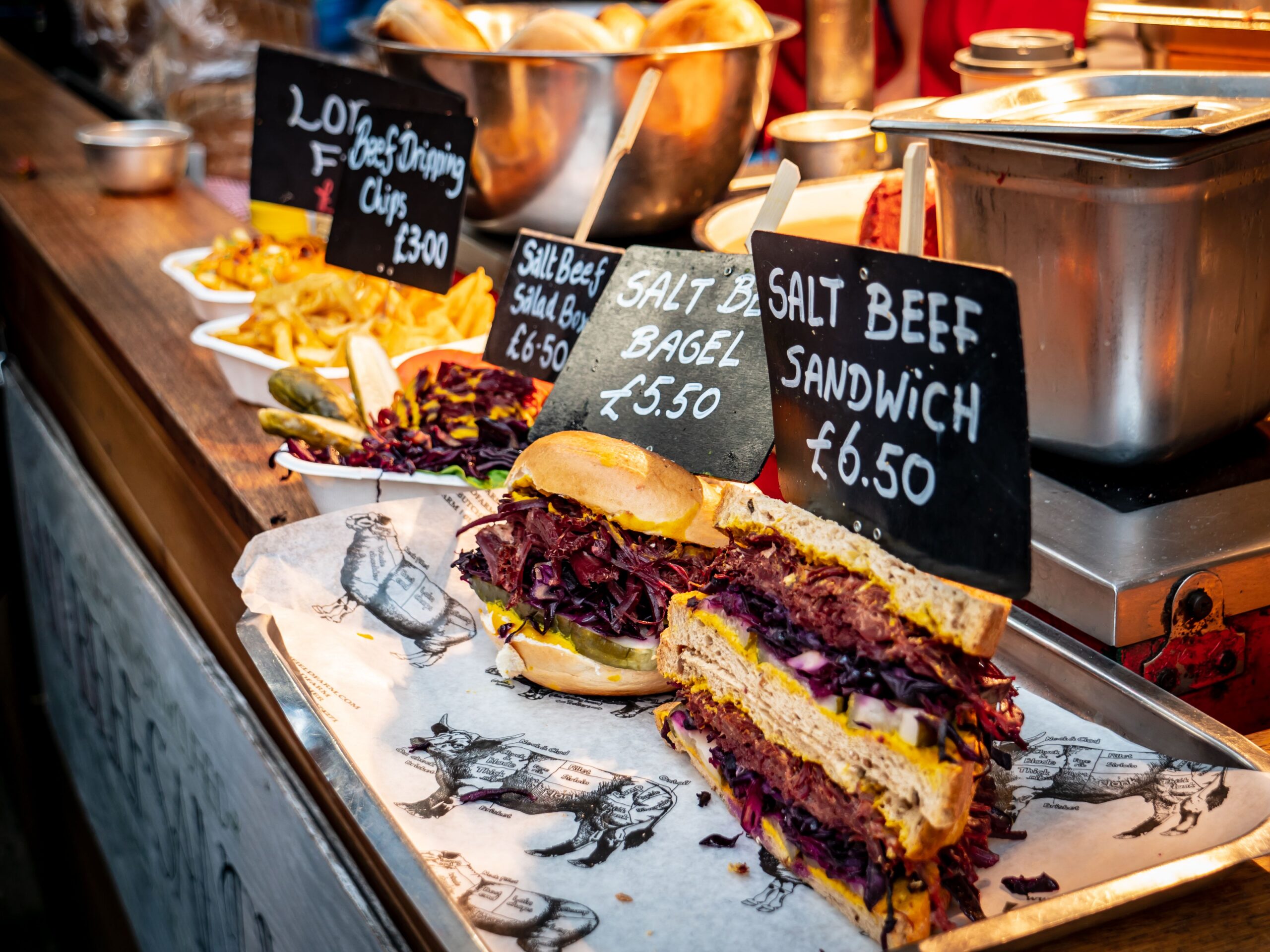
Before you start trading, you must register your food business with your local authority at least 28 days before you begin. This is a legal requirement under UK food law, and it applies to all food businesses, including mobile caterers, market stall holders, and home bakers who sell at events. Registration is free and cannot be refused, but you must do it on time.
You register through the local authority where your food business is based, which is typically where you store your food or prepare it, not necessarily where you trade.
Once registered, an environmental health officer may visit your premises or unit to check that your food handling practices meet the required standards.
All food handlers working in a street food business should hold at least a Level 2 Award in Food Safety and Hygiene for Catering.
This is a nationally recognised qualification that covers the basics of food hygiene, cross-contamination, temperature control, and personal hygiene. It’s not always a strict legal requirement, but it’s widely expected and will be looked at during inspections.
If you manage other staff, a Level 3 Award in Food Safety is recommended. Training doesn’t have to be expensive or time-consuming. There are plenty of accredited online courses available that can be completed in a day, and organisations like NCASS can help you access the right training resources as part of their wider compliance support for independent food businesses.
Typical conditions in a street trading consent for street food traders vary by local authority, but they often cover the following areas:
Always read your licence conditions carefully before you start operating.
Under the Local Government (Miscellaneous Provisions) Act 1982, streets in England and Wales are classified into three categories: prohibited streets, consent streets, and licence streets.
Prohibited streets are those where street trading is completely banned. Consent streets are where trading is allowed only with the council’s consent. Licence streets are where a formal street trading licence is required.
If you try to trade on a prohibited street, you can be fined regardless of whether you hold a consent for a different location. Before you choose a trading spot, always check with your local council which classification applies to that street. This step is easy to overlook but very important.
If you want to trade at a festival, farmers’ market, or private event, the street trading consent you hold for your regular pitch may not be sufficient. Many event organisers require their own permissions, and some events are classified as licensable activities under the Licensing Act 2003, which means a Temporary Event Notice (TEN) may be needed if alcohol is served.
For private land events, the landowner or event organiser typically holds the relevant permissions, but you should always confirm this in writing. Some councils also issue temporary street trading consents for one-off events or short trading periods. These are often processed faster and cost less than annual consents, making them a practical option if you’re testing a new location.
Yes, you need insurance before you start trading. In fact, most local councils will not issue a street trading licence without proof of public liability insurance.
This type of insurance protects you if a member of the public is injured or their property is damaged as a result of your trading activity. Most councils require a minimum of £5 million in public liability cover, though some require £10 million.
Product liability insurance is also strongly recommended. This covers you if a customer becomes ill or suffers harm as a result of the food you’ve sold. While it’s not always legally required, any serious street food trader should have it as standard. If you employ staff, even on a casual or part-time basis, employer’s liability insurance is a legal requirement under the Employers’ Liability (Compulsory Insurance) Act 1969, with a minimum cover of £5 million.
Getting licenced and compliant is the foundation, but building a successful street food business takes more than paperwork.
The traders who do well are the ones who choose the right locations, invest in quality equipment, and build a loyal customer base over time.
Planning your menu around what’s practical to cook and serve quickly in a street setting is a good starting point. Simple, focused menus tend to perform better than long, complicated ones. You’ll also want to think about pricing, portion sizes, and how your offering stands out from nearby competition.
If you’re operating a mobile catering unit, your vehicle or trailer must meet road safety and hygiene standards. All gas appliances need to be installed and certified by a Gas Safe registered engineer. You’ll need annual gas safety inspections to keep your certification current. Electrical equipment should be PAT tested, and your unit should meet the basic hygiene standards expected by environmental health officers.
Your cooking and storage equipment should be appropriate for the food you’re preparing. Adequate refrigeration for high risk foods, proper ventilation for cooking equipment, and accessible hand-washing facilities are all expected.

Location is one of the biggest factors in street food success. High footfall areas like city centres, high streets, train and bus stations, service areas of highways, parks, and event venues tend to generate the most consistent trade.
Research potential spots by visiting them at different times of day and on different days of the week to understand the flow of people.
Consider the competition in a given area before committing to a pitch. A spot with ten other burger vans might not be the right place for another burger van, but it could work well for something different. Pitch fees also vary widely, from free spots on public streets where you only pay for your licence to several hundred pounds per week at premium market sites. Factor pitch costs into your financial planning from the start.
Many first-time applicants run into problems that could easily be avoided with a bit of preparation. The most common mistake is submitting an incomplete application. Missing documents, such as an unsigned insurance certificate or an expired food hygiene certificate, will cause delays and may result in your application being returned.
Another frequent error is applying to the wrong council. If you plan to trade in multiple areas, you need a licence from each relevant local authority, not just the one closest to your home address.
Some traders also forget to register their food business before applying for a trading licence, which can create a compliance issue that takes weeks to resolve. Give yourself plenty of time, double-check your documents, and don’t leave everything to the last minute.
Finally, be honest and thorough in your application. If you plan to use gas equipment, say so. If your unit is a converted horsebox rather than a standard van, describe it accurately. Councils can and do follow up with site visits, and any discrepancy between what you’ve declared and what you’re actually operating can jeopardise your consent to trade
Getting your street food trading licence is not a one-and-done task. Staying compliant is an ongoing responsibility. Licences are typically valid for one year and must be renewed before they expire. Missing a renewal deadline can mean trading illegally, even if you’ve been operating without issues for years.
Local environmental health officers can inspect your food business at any time without prior notice. Keeping accurate records of food temperatures, cleaning schedules, and staff training is part of your daily routine as a compliant food trader. Your food hygiene rating should be displayed clearly wherever required.
Staff training needs to be kept up to date too. If you take on new team members, make sure they complete food hygiene training before handling food. Building a compliance calendar to track renewals, inspection schedules, and training dates makes it much easier to stay on top of everything.
How much does a street trading consent cost in the UK?
The cost varies depending on your local council, but most traders can expect to pay between £200 and £1,000 per year. Some councils charge lower fees for part-year licences or specific pitch types. Always check with your local authority for the exact fee structure in your area.
Can I trade anywhere in the UK with one street trading licence?
No. A street trading consent is issued by a specific local council and only covers the area or pitch named in that licence. If you want to trade in multiple local authority areas, you’ll need to apply separately to each council.
What happens if I trade without a street food licence?
Trading without a licence is a criminal offence. You could face a fixed penalty notice, a fine of up to £1,000, or in more serious cases, prosecution. Your equipment may also be confiscated. It’s not worth the risk.
How long does it take to get a street trading consent approved?
Most councils process applications within 4 to 8 weeks. Some temporary licences may be approved faster. Always apply well in advance of your planned start date to avoid any gaps in your trading schedule.
Do I need public liability insurance to get a street trading consent?
Yes, in most cases. The majority of local councils require proof of public liability insurance, typically with a minimum cover of £5 million, as part of the application process. Without it, your application is likely to be rejected.
What’s the difference between a street trading consent and a food business registration?
A street trading consent gives you permission to trade on a public street or in a designated space. A food business registration is a separate legal requirement that registers your business with the local authority as a food handler. You need both to operate legally as a street food trader in the UK.
Can my street food licence be revoked after it’s granted?
Yes. Councils can suspend or revoke a consent if you breach the conditions attached to it, receive repeated complaints, fail food safety inspections, or provide false information in your application. Maintaining your compliance standards is the best way to protect your licence once it’s been granted.

Want to know more about starting up a business? Visit our Start & Run a Catering Business page for more helpful guides and resources.
We're here to help make your catering business a success. Whether that be starting up or getting on top of your compliance and marketing. We're here to help you succeed.
Find out more Request a call back





 Featured Training
