
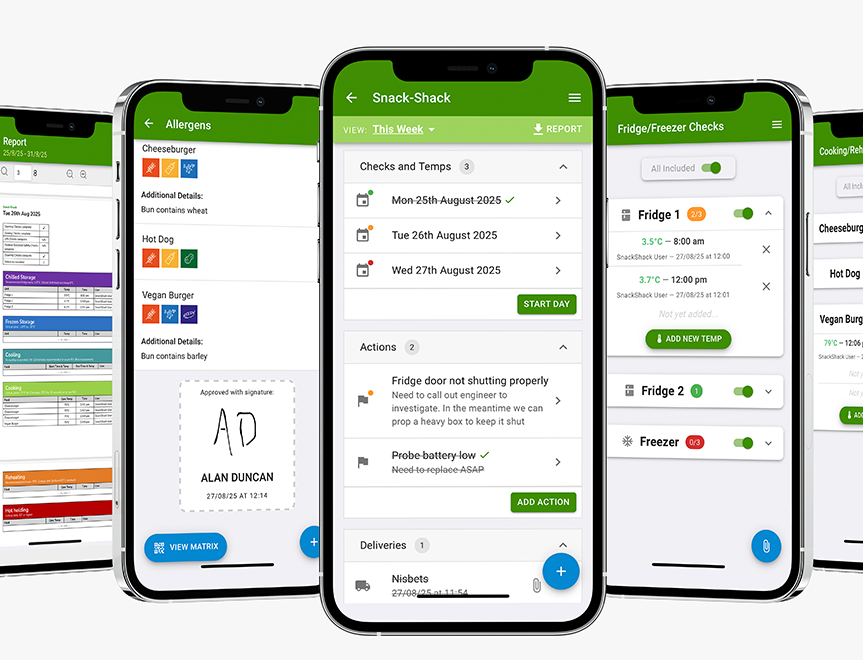
Digital Food Safety System
Save time, reduce hassle and keep your business inspection-ready.


Collecting guest data is one of those things that often gets talked about as essential, but in practice, it can feel slightly awkward to implement, especially in a hospitality setting where the focus is on making people feel relaxed, welcome, and not under any pressure to hand over their details.
On one hand, it’s genuinely useful to have a way of staying in touch with your guests after they’ve visited, whether that’s to let them know about events, share updates, or simply remind them you’re there, but on the other hand, if it’s handled badly, it can feel intrusive, unnecessary, or even put people off altogether.
In hospitality, that balance really matters.
If you ask for too much information, at the wrong time, or in a way that feels clunky or forced, people will simply ignore it or walk away, whereas if you ask in a natural way, with a clear and reasonable reason, most guests are actually quite open to sharing a few basic details.
The key idea to keep in mind is simple: people are generally happy to share their information when they can see the benefit of doing so.
Want more simple, proven ideas to help you get found locally, attract more customers, and turn first-time visitors into regulars?
While a social media follower might see your content occasionally, and a website visitor might browse your menu and then leave without returning, a guest whose details you have collected is someone you can reach out to directly, without relying on algorithms, timing, or chance.
That means you have the ability to send a message that lands straight in their inbox, whether that’s an invitation to come back, a reminder about an upcoming event, or simply a small update that keeps your venue in mind for when they’re deciding where to go next.
In simple terms, it gives you a way to stay connected with your customers, rather than hoping they find you again on their own.
The most common mistake isn’t collecting guest data itself, but rather the way it’s asked for, because if the process feels too long, too complicated, or like it’s asking for more than it reasonably should, people will either abandon it halfway through or not engage with it at all.
Guests aren’t expecting to fill out lengthy forms just to book a table or enjoy a coffee, and if it feels like a task rather than a quick, simple step, they’re unlikely to complete it.
So instead of thinking about how much information you can collect, it’s usually more helpful to step back and ask yourself:
“What’s the smallest amount of information we actually need to make this worthwhile?”
The most effective way to collect guest data is to make it feel like a natural part of something the guest is already doing, rather than something that interrupts their experience or requires them to stop and think too much.
For example, it might sit within a booking process they’re already completing, or appear when they connect to your Wi-Fi, or even come up as a simple option at the end of a visit when they’re paying or about to leave.
When it fits into an existing action like that, it feels less like a request and more like a standard step, which makes people far more likely to engage with it without hesitation.
People are far more comfortable sharing their details when they understand what they’ll get in return, and while that doesn’t necessarily mean offering constant discounts or incentives, it does mean being clear about why you’re asking.
It might be that they’ll receive updates about events, early access to bookings, occasional offers, or simply news about what’s happening at your venue, but whatever it is, it should be easy to understand and clearly communicated.
When guests know what to expect and feel like there’s something worthwhile on the other side, they’re much more likely to say yes.
One of the easiest ways to improve your response rate is to reduce how much you’re asking for, because the more fields someone has to fill in, the more likely they are to stop halfway through or decide it’s not worth the effort.
In most cases, you really only need a name and an email address, and while there may be situations where you want to collect slightly more information, keeping it as simple as possible will almost always lead to better results.
You don’t need anything overly complex to start building a useful guest list, as there are several straightforward ways to gather details that can fit naturally into the way your business already operates.
Booking forms are an obvious starting point, since guests are already committing to a visit and are more likely to engage with a short, simple prompt, while Wi-Fi sign-ups offer another easy exchange, particularly for guests who are already expecting to connect their devices.
Digital menus or QR codes can also work well, especially when people are already using their phones during their visit, and small, subtle prompts in the venue itself, such as a table sign or a note at the till, can gently remind guests that they have the option to stay connected.
Once someone has shared their details, it’s important to be clear about what will happen next, because this is where trust is either built or lost.
Letting guests know how often you’ll contact them, what kind of messages they’ll receive, and reassuring them that they can unsubscribe at any time helps create confidence and makes the whole process feel more transparent and respectful.
When people feel informed, they’re far more likely to stay subscribed and engage with your messages over time.
If you want to quickly review how you’re currently handling guest data, this short check can help you spot any easy improvements without needing to go into too much detail.
Ultimately, this approach works because it respects the guest experience while still allowing you to build a useful database that supports your business, and by keeping things simple, clear, and relevant, you avoid the feeling of pressure while still creating opportunities to reconnect with people who have already shown an interest in what you offer.
At NCASS, we work with thousands of bars, cafés and restaurants across the UK. From getting found online to expert guidance when you need it, we’re here to help your business thrive. Call us on 0300 124 6866 to chat.



 Featured Training