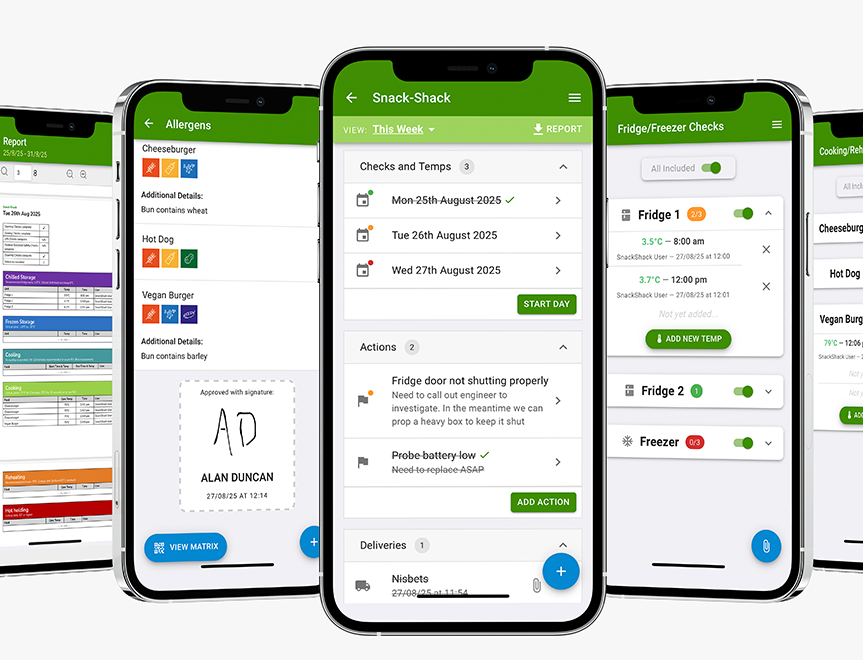
Digital Food Safety System
Save time, reduce hassle and keep your business inspection-ready.

Most hospitality businesses already collect reviews without really thinking about what happens next. Someone might leave a nice bit of feedback on Google, your business gets tagged into a social post, or it could just be that a regular mentions that the service was “excellent as usual.”
Reviews are one of the most useful forms of marketing a hospitality business has, because they answer an important questions potential guests are always asking themselves:
“Can I trust this place?”
“Do I want to spend my hard-earned money here?”
Utilised properly, reviews can help build confidence at every stage of the customer journey, from the moment someone lands on your website to the moment they decide whether to book.
Want more simple, proven ideas to help you get found locally, attract more customers, and turn first-time visitors into regulars?
When people are choosing somewhere to eat or drink, they naturally look for reassurance. Photos help a lot, menus help substantially and social media adds to the aesthetic.
Reviews, however, carry a different kind of weight because they come from other customers rather than the business itself.
A well-placed review quietly reinforces:
That reassurance is often what tips someone from “maybe” into making a booking.
One of the biggest mistakes businesses make is either ignoring reviews completely or trying too hard to display them everywhere. You don’t need huge testimonial sections or pages filled with endless quotes.
In fact, in most cases, a few carefully chosen reviews placed in the right spots work much better. The goal is simply to help people feel confident in their decision and turn browsing into a booking.
Reviews are most effective when they appear close to decision-making moments.
That might be:
At these points, guests are already considering whether to visit, and a strong review can help remove hesitation.
Generic comments like “great food” or “lovely place” are nice to have, but they’re not especially memorable. More detailed reviews tend to work better because they feel more believable and help people picture the experience.
For example:
Specific feedback feels more genuine and persuasive.
Reviews should support your website and menus, not overwhelm them. A small quote in the right place usually has more impact than filling entire sections with testimonials.
A few simple approaches work well:
The aim is subtle reassurance, not clutter.
Reviews can also work well inside the venue itself.
For example:
These small touches reinforce trust and remind guests that other people enjoy the experience too.
Different reviews work better in different places. A review praising atmosphere might work well on your homepage, while one mentioning a specific dish could sit naturally beside your menu.
Similarly:
Matching the review to the context makes it feel more natural and relevant.
It’s just as important to avoid certain responses.
Try not to:
Even if a review feels unfair, your response is not for the reviewer alone, it’s for everyone else reading it later.
Why This Works
Reviews reduce uncertainty and help new guests feel more confident about booking, visiting, or recommending your venue to someone else. Testimonials from real customers makes your business sound more trustworthy than traditional advertising, and the best thing, is they’re free.
10-Minute Review Placement Check
If your reviews are currently sitting only on Google or social media, this quick check can help you start using them more effectively.
Step 1: Find Your Best Reviews
Look for reviews that mention:
☐ Specific dishes or drinks
☐ Atmosphere
☐ Service
☐ Overall experience
Step 2: Choose One Strong Quote
Pick one review that feels:
☐ Genuine
☐ Specific
☐ Easy to understand quickly
Step 3: Review Your Website
Ask yourself:
☐ Is there anywhere a review could help build confidence?
☐ Near booking buttons?
☐ On menu pages?
Step 4: Think Beyond the Website
☐ Could reviews appear on menus?
☐ Table cards?
☐ Event promotions?
Step 5: Add One Review Somewhere Visible
Choose one location and add a customer quote this week.
Reviews are already one of your strongest marketing tools. Using them well simply means putting them where future guests are most likely to need reassurance before deciding to visit.
At NCASS, we work with thousands of bars, cafés and restaurants across the UK. From getting found online to expert guidance when you need it, we’re here to help your business thrive. Call us on 0300 124 6866 to chat.
 Featured Training