

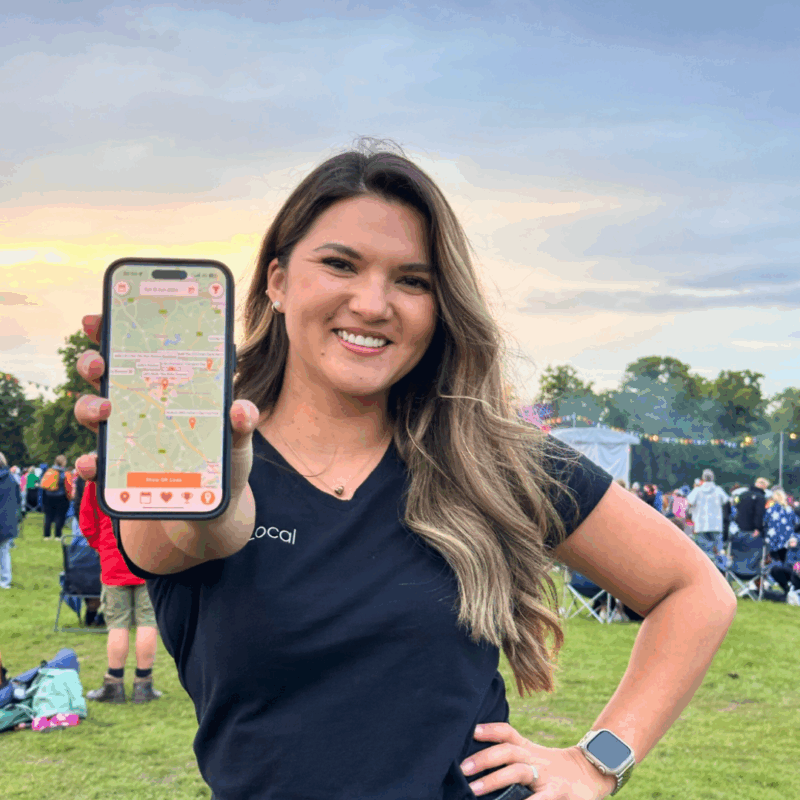
We speak to Vanessa Anderson, founder of the Indi Local app and social media channel. Indi Local is a local discovery platform that helps people find and support independent businesses in their area. By showcasing local food, drink, retail and hospitality venues through guides, features and community-focused content, Indi Local connects consumers with unique independent businesses and encourages people to shop, eat and spend locally.
What made you realise there was a real gap in the market for something like Indi Local?
It was embarrassingly simple. I was tired, couldn’t be bothered to cook, and ended up at a drive-thru chain. My partner and I took our food to a local park to “at least make an evening of it” and arrived to find a pizza truck, slinging out these made to order, wood-fired pizzas. I was gutted because I would have gone there in a heartbeat if I’d known he existed. I realised this wasn’t the first time – I’d stumbled across food trucks and local popup events for ages and always kicked myself for not knowing they were there. When I thought about it – there was no reliable way to find them. You can’t Google a street food truck’s location, and you’d have to already know who you’re looking for on social media and hope they’d posted that week. It just felt like a really broken experience for customers, but more importantly for the vendors who were cooking amazing food that people just weren’t finding.
At what point did the idea shift from “this should exist” to “I’m actually going to build it”?
Pretty quickly if I’m honest. I have a background in software development, so the question was never really can I build this – it was should I and is the problem real enough. I started talking to vendors and the same thing kept coming up: food going to waste because footfall was unpredictable, and social media not cutting through the way it used to or being too much effort to cut through the noise. That was enough for me. I started with an Instagram account, posting every time I found a new vendor and I’d interview them or film their food which gave them some free content for their own socials too. I made “What’s cooking this week in Northampton” timetable-style posts and the followers grew, and people kept telling me they kept looking out for them on social media.
Was there a particular moment early on that made you think, “this is working”?
One of our vendors told me their sales had gone up 50% since being on Indi Local and telling his customers to follow him on there rather than social media. That was early on, before we even had the full app. That number hit differently. But, what keeps me going is the smaller stuff too – people stopping me at events because they recognised me from Instagram, vendors inviting me to visit their suppliers because they trusted what we were building, getting invited to talk about my journey on podcasts or panels. When a community starts to form around something, you feel it before you can measure it and I really want to help this industry thrive. Recently, people started approaching us for other reasons – like requesting to book street food vendors that they found on our app for corporate events, local festivals, at pubs, and most recently a marina on the Thames! Or customers asking when they could pre-order food through the app so they could plan in advance. I realised we had the recognition and now it’s starting to evolve.
Why do you think independent operators struggle to get visibility compared to chains?
Chains have marketing budgets, SEO teams and brand recognition doing the heavy lifting before a customer even opens their phone. Independents have Instagram and word of mouth – and Instagram’s algorithm is not their friend. If you’re a street food vendor posting your weekend location at 9pm on a Friday, you’re competing with every other piece of content in someone’s feed. The reach just isn’t there anymore, and most vendors don’t have the time or resource to game it. The playing field isn’t level, and that’s exactly the problem Indi Local exists to fix.
What makes a street food business stand out and build loyal customers?
Consistency and character. The best owners I know aren’t necessarily serving the most complex food – they’re showing up reliably, treating customers like people they know, and being very clear about what they stand for. Quality is table stakes. What builds loyalty is the feeling people get when they support you. I’ve seen it with vendors who source locally, who know their regulars’ orders, who are genuinely excited about what they do. That energy is impossible to fake, and customers absolutely feel it.
Indi Local feels very community-driven – how intentional was that from the start?
Completely intentional. The name – Indi – is a nod to independence and to the local piece. I grew up watching communities hollow out when local businesses struggled, and I think there was a real post-Covid shift in people wanting to put their money somewhere meaningful. Indi Local was built on that belief. We’re not just a directory. We want people to feel pride in what’s on their doorstep. That said, I didn’t fully anticipate how much the community would shape us – vendors bringing us into their world, inviting us to see where their food comes from, treating us as partners rather than a platform. I really didn’t want to become another faceless technology company, so being part of the in-person community – that’s been the best part.
What’s been the hardest part of scaling the platform?
Knowing when to slow down and when to push. I’m very much a build-iterate-repeat founder, and the truth is that cycle has caused burnout. It’s easy to keep launching features without giving yourself or the product time to breathe. Scaling also means saying “no” more – to the wrong partnerships, to features that sound good but dilute focus. The hardest thing isn’t the technical challenges; it’s the discipline to keep asking “is this the right thing to build right now?”. We’ve been pulled in different directions (which is a blessing and a curse) and as a small team we’re spread very thin, but for me it’s about building what people actually want and need so I’m having to adapt every day and sacrifice some things.
Where do you think the independent street food and pop-up scene is heading over the next few years?
Street food halls are going to be a much bigger deal. Disused buildings turned into vendor hubs – low-overhead dining that gives independents a foot in the door without the risk of a full bricks-and-mortar. Customers having options when they go out to eat. I also think the corporate market is massively underutilised – there are huge company car parks sitting empty that could be hosting street food trucks for staff lunches and events, putting money directly back into local communities. The vendors that thrive will be the ones who treat their business like a brand from day one, not an afterthought.
What role can technology play in helping independents compete with larger brands?
Technology should do the boring but important stuff so independents can focus on the thing they’re actually good at. Pre-ordering to reduce waste and queue anxiety. POS systems that don’t require a tech degree to operate. Visibility tools that don’t depend on an algorithm favouring you that day. The big brands have all of this infrastructure – we’re just trying to make sure small businesses have access to it too. That’s the whole point of what we’re building. We’re bringing the technology to the small businesses that have been forgotten.
What has surprised you most since starting Indi Local?
How much the business has evolved. I came in thinking Indi Local was a consumer discovery app. What I’ve learned is that the vendors’ problem is as much about running their business efficiently as it is about being found. We’ve ended up building an agency placement service, a pre-ordering and KDS (Kitchen Display Management hub) – things I wouldn’t have predicted on day one. And honestly, the generosity of the community has surprised me too. People root for this. Business owners share it without being asked. That organic energy is something you can’t manufacture.
What advice would you give someone wanting to launch a business in hospitality or tech?
Talk to your customers obsessively, especially early. The problem you think you’re solving and the problem they actually have are often not the same thing. Start simple – I launched with a map and a calendar, not a fully built app – and let reality shape what you build next. And don’t romanticise the grind. Burnout is real, celebrate the wins even when they feel small, and find people in your corner who actually understand what you’re building. Both industries are tough. Passion matters but it won’t carry you through everything on its own, you need to figure out the right business model to make sure you can keep going – and that’s something I’m still navigating to this day.
You’re a panel speaker on ‘Building a successful social media presence – marketing your brand for growth’ – how important is storytelling and social media in helping independents grow?
Social media is still one of the most powerful tools an independent has, but only if you understand what it’s actually for. It’s not just a noticeboard for your Saturday pitch location. It’s where people decide whether they trust you before they’ve ever tasted your food. The vendors I’ve seen build real followings aren’t posting the most polished content – they’re sharing their story, their process, their why. People buy from people. Show them the family butcher you source from. Show them the early morning prep. Show them the mess as well as the finished plate. That’s what chains can’t replicate, and it’s the single biggest advantage an independent has. The mistake is thinking you need to look like a big brand to be taken seriously. You don’t. You just need to be real.
 Featured Training
OUR MEMBERSHIP
We're here to help make your catering business a success. Whether that be starting up or getting on top of your compliance and marketing. We're here to help you succeed.
Want our latest content?
Subscribe to our mailing list and get weekly insights, resources and articles for free
Get the emails