
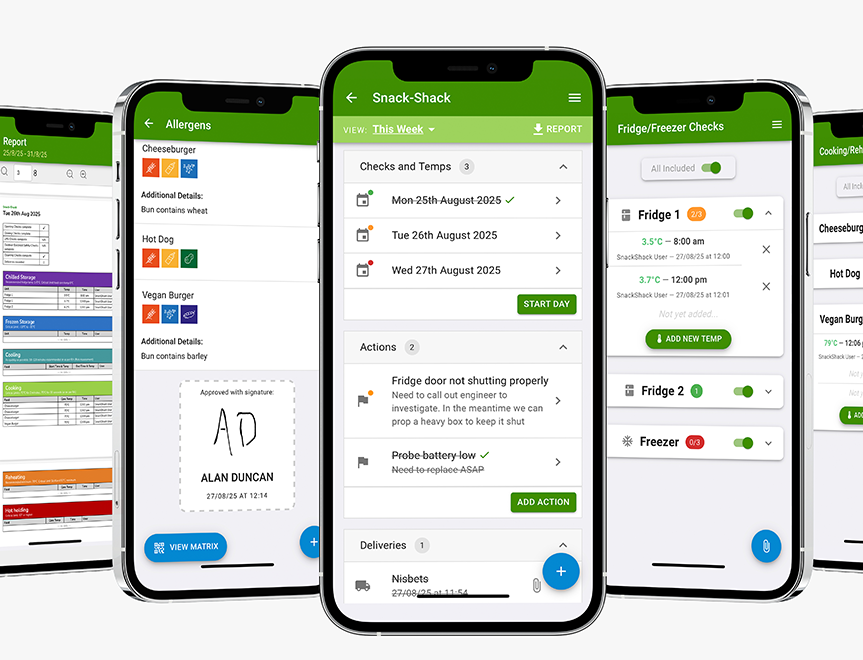
Digital Food Safety System
Save time, reduce hassle and keep your business inspection-ready.

From a simple portable bar at a wedding to a fully equipped drinks trailer serving thousands of people at a festival, there are plenty of ways to build a business around drinks.
Mobile bars can take many forms. Some are deliberately simple and low-cost, while others involve substantial investment in purpose-built equipment, vehicles, refrigeration, storage and staff. You might start by providing a bar for private parties and weddings, then develop into corporate events, festivals or larger-scale hospitality.
The important thing is to understand what you’re taking on.
A successful drinks business isn’t simply about knowing how to make a great cocktail or pour a pint. You need to understand your customers, your numbers and your responsibilities, while building an operation that can deliver a consistent service when things get busy.
This guide takes you through the opportunities, challenges and practical considerations involved in starting and growing a drinks business.
Thinking of starting a business? Answer a few questions that will help us support you and others in your position going forward.
One of the attractions of the drinks sector is the variety of businesses you can create.
You could specialise in weddings and private parties, operate at festivals and shows, work with corporate clients or develop a distinctive bar concept around a particular type of drink.
Cocktail bars, cider bars, wine bars, tiki bars and Champagne or Prosecco bars have all found their place in the events market. There are also opportunities around experiences, such as cocktail-making classes, as well as businesses specialising in non-alcoholic drinks.
Your concept doesn’t have to be complicated. A simple, well-executed idea can be just as effective as an elaborate one. What matters is having a clear understanding of what you’re offering and who you’re offering it to.
If a couple is looking for a bar for their wedding, for example, they’re unlikely to be comparing businesses solely on the price of a pint. They’ll be looking at the appearance of the bar, the drinks menu, the service, the professionalism of the business and whether it fits the atmosphere they’re trying to create.
That creates an opportunity for smaller businesses to compete on experience rather than simply price.
There is significant demand for drinks services at private, corporate and public events, but that doesn’t mean every event is an opportunity.
Many larger events already have their bar arrangements in place, and established licensed businesses can have advantages when competing for work. They may already have supplier relationships, buying power, storage facilities, experienced staff and the licensing arrangements they need. Breaking into the larger events market can therefore take time.
For a new business, private hire can be a more accessible place to start. Weddings, birthdays, parties and corporate functions allow you to build experience, develop your reputation and learn how your operation works without immediately taking on the financial and operational demands of a major festival.
As your reputation grows, you can decide whether you want to move into larger events.

Subscribe to our mailing list and get weekly insights, resources and articles for free
It’s easy to get excited about the physical side of a drinks business.
You might have your eye on a beautiful horsebox, a purpose-built trailer or a professional cocktail bar. But before spending heavily, work out whether the numbers make sense.
Your costs could include equipment, refrigeration, glassware, kegs, stock, transport, storage, insurance, licensing, staffing, pitch fees, payment processing, marketing and maintenance. Then there’s working capital.
A large event may require you to commit money months before you actually trade. You could have deposits or concession fees to pay, stock to purchase and staff to book, while the revenue from the event may not arrive until afterwards.
This is one of the reasons smaller businesses need to be particularly careful when assessing event opportunities; a busy event isn’t necessarily a profitable event.
One of the biggest decisions you’ll make is deciding which events to take.
Event organisers may provide attendance estimates when inviting businesses to tender, but if those figures are optimistic, your sales could fall well below expectations.
Before committing yourself, understand how the event works commercially. Find out what the concession costs, how many people are expected to attend and what other bars will be operating. Look at the event’s trading hours, your position on the site and the type of audience it attracts. Make sure you understand what equipment, power, water, staff and stock you’ll need and exactly what the organiser expects you to provide. Most importantly, model the event financially before signing the agreement.
Work out what happens if sales are 20%, 30% or even 50% below your expectations. If the numbers only work in a best-case scenario, you may be taking on more risk than the opportunity is worth.
If you’re selling alcohol, licensing needs to be considered from the outset.
The requirements will depend on what you’re doing, where you’re operating and the licensing arrangements already in place at the venue or event.
In England and Wales, a Temporary Event Notice (TEN) can authorise certain licensable activities at relatively small-scale events, including the sale of alcohol in circumstances covered by the legislation. A TEN can be useful where a venue isn’t already licensed for the activity you want to provide, or where you need to extend the activities permitted by an existing licence. It isn’t, however, a catch-all solution for every mobile bar.
You may also need to consider personal licensing and the venue or organiser’s own licensing arrangements. Don’t assume that because an event is taking place at a licensed venue, your own responsibilities have automatically been dealt with.
Get your licensing position clear before accepting work, particularly as your business moves into different types of events.
Selling alcohol brings responsibilities that go beyond simply serving customers.
Your staff need to understand responsible alcohol service and what to do when someone should no longer be served. At busy events, this can become particularly important. You also need to think about what happens when a customer becomes difficult or aggressive.
Alcohol can increase the potential for conflict, and a mobile bar operator needs to have a sensible approach to dealing with incidents. Your team should understand when they should refuse service, when to involve event security and how incidents should be recorded.
This isn’t about expecting your bar staff to become security guards. It’s about making sure everyone knows their role and that you have appropriate arrangements in place for dealing with problems.
Stock is one of your biggest assets, so controlling it properly is essential.
Established businesses in the licensed trade can have a significant advantage here. They may already have relationships with suppliers, access to competitive prices and somewhere to store stock between events. They may also have a route for selling anything left over – a new business doesn’t necessarily have those advantages.
Think carefully about what you’re buying, where you’ll store it and how much you genuinely need for each event. Take account of breakages, wastage and stock left over at the end.
As you grow, better buying arrangements and stronger supplier relationships can improve your margins, but don’t tie up large amounts of cash in stock simply because the unit price looks attractive.
Drinks and food can be a natural combination.
Wine and cheese, Champagne and oysters, beer and burgers or cocktails and small plates can all create attractive offers for customers. However, offering food alongside alcohol isn’t always straightforward at events.
Food and alcohol concessions are often handled separately, and an organiser may already have agreements with other traders. You could therefore find yourself paying separate fees for the two activities or being restricted from selling certain products.
If you’re considering adding food to your drinks business, investigate the event’s trading arrangements before investing in additional equipment, stock and staff. You’ll also need to understand the food business requirements that apply to the food you’re preparing and selling.
Like any business, a drinks operation needs to understand its risks.
The nature of the business means you’ll need to think about customers, staff, equipment, vehicles, trailers, alcohol service, public events and the practical hazards involved in setting up and operating a temporary bar.
Slips and trips, glassware, electrical equipment, gas, fire, manual handling and transport are all examples of areas that may need consideration depending on your operation.
Appropriate insurance should form part of your planning from the beginning.
Your requirements can change as the business develops. Moving from private parties to large public events, employing staff or investing in a vehicle can all change the risks you’re carrying.
Review your arrangements whenever your business changes rather than assuming the cover you started with will always be appropriate.
For many drinks businesses, presentation is a major part of the product.
Your customers aren’t simply buying a drink. They’re buying the atmosphere and experience surrounding it. That means your bar, branding, menus, glassware, staff presentation and drinks themselves all contribute to the impression you make.
This is particularly important when marketing to weddings and corporate customers. Your website and social media should give people a clear idea of what you offer and the type of events you work at.
Good photography can be particularly powerful. Show potential customers what your bar looks like in a real setting, what your drinks look like and how professionally you operate.
The more confidently you can communicate your offer, the easier it becomes for customers to compare you on something other than price.
Start where your proposition makes sense.
Private parties and weddings can be a good way to build experience and develop a portfolio. Corporate events can provide opportunities for repeat business, while relationships with venues, wedding planners, caterers and event organisers can create a valuable source of referrals.
Don’t underestimate the importance of relationships in the events industry. A venue manager who knows that you’ll turn up when promised, set up professionally and deal with problems calmly may be much more valuable to your business in the long term than a one-off booking.
Every event should therefore be treated as an opportunity to build your reputation, so collect testimonials, photograph your work where appropriate and keep developing your portfolio.
You don’t need to start by trying to win a contract for a major festival. In fact, smaller events can provide an excellent testing ground.
They allow you to discover how much stock you actually need, how long setup takes, where your bottlenecks are, how quickly you can serve customers and whether your pricing really works.
As demand develops, you might invest in better equipment or a dedicated trailer. You could take on larger events, employ additional staff or operate more than one bar, but growth should be built on a model that already works.
A bigger business brings bigger costs and bigger risks. The aim isn’t simply to sell more drinks; it’s to create an operation that remains profitable and manageable as it grows.
One of the biggest mistakes is investing too much before you’ve proved the concept. A beautiful bar or trailer won’t make an unprofitable business profitable.
Another is underestimating working capital. You may need to spend heavily before you receive the income from an event.
It’s also easy to assume that a busy event guarantees good sales – it doesn’t. Location, competition, weather, audience, pricing and event management can all affect your takings.
Don’t compete purely on price either. A distinctive offer and professional service can give you a much stronger position.
Finally, don’t treat licensing, insurance, staffing and stock control as administrative jobs to deal with once you’ve won the work. They are part of the business model.
✓ Before you start trading, make sure you’ve considered your business concept, target market, pricing and financial model.
✓ Check the licensing requirements that apply to your activities and make sure you understand the arrangements for every event you work at. Arrange appropriate insurance and consider the risks associated with your operation.
✓ Think about where your equipment and stock will be stored, how everything will get to an event and how you’ll manage setup and breakdown.
✓ Put sensible procedures in place for responsible alcohol service, staffing, stock and money, then start building your reputation.
✓ You don’t need to have everything in place to operate at a major festival on day one. Start at a scale you can manage, learn from every event and reinvest as the business proves itself.
A great drinks business brings together a good product, a strong concept and excellent service, but behind that is a solid operation.
Whether you’re starting a small mobile bar for weddings or have ambitions to operate at major festivals and events, understanding the commercial and regulatory side of the business is just as important as creating the perfect drink.
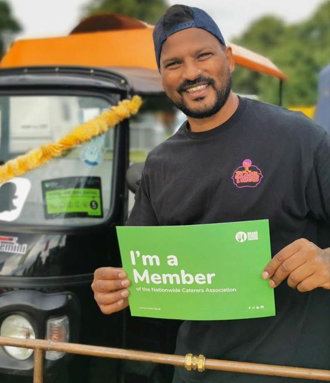
NCASS supports independent food and drink businesses with practical guidance, compliance support, training, insurance and other resources designed to help you run your business with confidence.
We're here to help make your catering business a success. Whether that be starting up or getting on top of your compliance and marketing. We're here to help you succeed.
Find out more Request a call back


 Featured Training
