


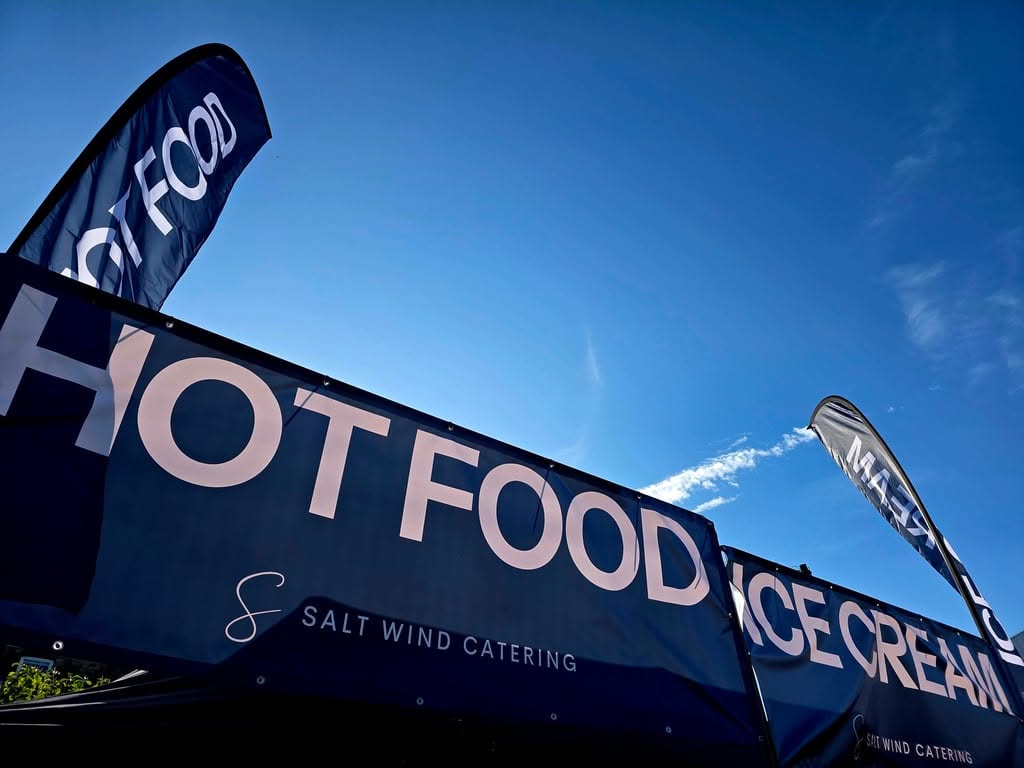
When Storm Goretti battered Cornwall in January 2026, leaving tens of thousands of homes without power, Salt Wind Catering stepped up to support its local community. Based in Redruth, the independent caterer was deployed by NCASS on behalf of National Grid to provide emergency welfare catering in Penryn, serving hundreds of hot meals and drinks to residents over several days.
But for Salt Wind, responding at short notice is nothing new. With extensive experience catering for film and TV productions in remote, off-grid locations, the team has built a business around being ready to go wherever they’re needed. In this week’s Member Spotlight, Salt Wind Catering owner, Mark, tells us about their journey into emergency catering, the realities of the Storm Goretti response and why a hot meal can make such a difference when a community needs it most.
Can you tell us the story behind the business and what drives you to do what you do?
Salt Wind Catering is based in Redruth, and we’ve grown into Cornwall’s fastest-growing independent caterer, with more than 700 events catered since 2024 and a 5.0 rating across 67 Google and Facebook reviews. A big part of that growth is film and TV.
We feed cast and crew on location from call time to wrap, and we travel up to 300 miles from Redruth to do it, across the South West, into Wales and beyond, including multi-week feature film shoots. Alongside that we cater weddings, hog roasts, corporate events and welfare catering for organisations including the NHS and National Grid.
What sets us apart is that the whole operation is self-contained: our own power, gas, water and refrigeration, so we can set up a full kitchen in a field, a car park or a remote location with nothing on site. What drives us is simple: good food, turning up when we say we will, and looking after the people we’re feeding, whether that’s a film crew on a 12-hour day or a town without power.
Why did you join the NCASS Emergency Catering Service?
Film work trains you for exactly this. Call times move, locations change at short notice, numbers go up and down, and there’s rarely mains power, so we’ve built everything around being able to pack up, travel and be feeding people within hours, wherever we’re needed. We’d always known those same skills could help people when things go wrong. The ECS gave us a way to offer them when they’re needed most, with the support and organisation of NCASS behind us.
 Tell us about the ECS callout you took part in?
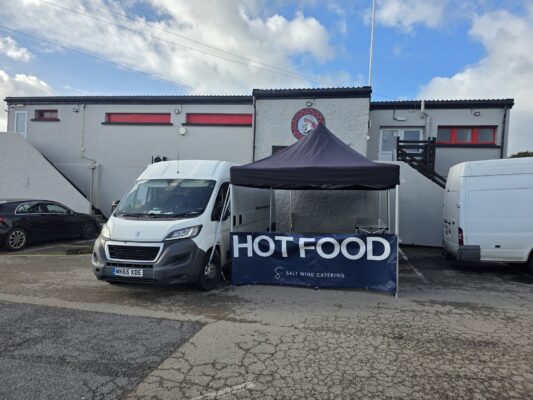
In January 2026 Storm Goretti brought a red weather warning and the worst windstorm parts of Cornwall had seen in 30 years. More than 50,000 properties in Cornwall lost power, and the morning after the storm around 45,000 were still without it. While National Grid’s engineers worked through the wind and rain to reconnect people, NCASS deployed us on their behalf to provide welfare catering in Penryn, where hundreds of households were cut off. We were there for four days straight from the Friday and went back for a fifth day the following Wednesday.
Take us back to the moment the callout came through…
The call came from NCASS that National Grid needed welfare catering for the people of Penryn who had lost their power, and they needed it that day. Penryn is just down the road from our kitchen in Redruth, so the people we’d be feeding weren’t strangers, they were our neighbours. There wasn’t much to think about. We said yes.
What happened once you’d accepted the callout?
We were set up and serving in Penryn within three hours of the call. Our kitchen doesn’t rely on the grid, and we’re used to mobilising for film units at short notice, so we could start straight away. Behind the scenes it meant loading the van, bringing in stock, rearranging the team’s week and keeping a careful record of every meal and drink. Back at the office, the team kept people informed through social media, local radio, TV and newspapers, so that anyone who needed us knew where to find us.
Did you approach anything differently from a typical catering job?
On a normal job we know the numbers, the venue and the menu weeks ahead. Here there was no set site or signage when we arrived and no way of knowing how many people would come, so we chose a spot people could reach, cooked for whoever turned up, and kept going for as long as we were needed. The other difference was that people needed far more than food, so we became a place for information and company as much as a kitchen.
What was it like arriving on site and seeing the situation first-hand?
We set up in the council car park on Commercial Road in Penryn. Homes all around were without heating, lights or any means to cook, and with phones and broadband down, many people had no idea when their power would be back or where to turn for help. Because we carry our own power, gas and water, we could get the kitchen running straight away and start handing out hot food and drinks.
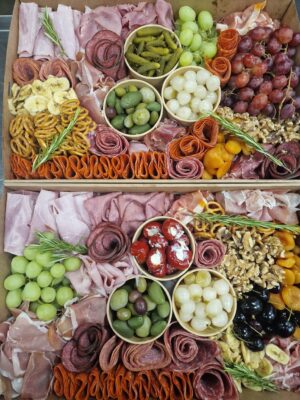
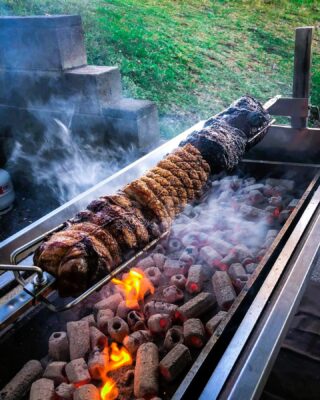
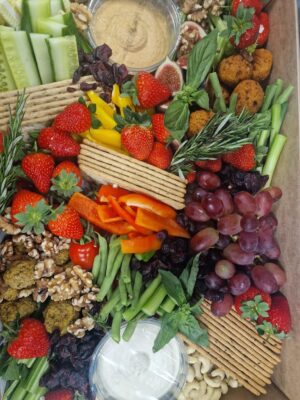
What did you offer and roughly how many people did you serve?
We served hot meals, with a meat and a vegetarian option, alongside hot and cold drinks, and late into the night we were filling hot water bottles so an older resident or a young family could get through to the morning. On our busiest day we served 437 hot meals and 483 drinks. When you’ve lost your heating and your means to cook, a hot meal does more than fill you up. People came to the stall for a meal and stayed for a conversation, some for reassurance, some just for company, and the look of relief when someone was handed something hot after a cold night in the dark told us everything.
Was there a particular interaction or moment that has stayed with you?
The people. Every day we had residents in tears at the stall, many of them elderly, cold, tired and worried about how much longer they could cope. Parents came to us with young children who had been sitting in the car for hours because it was the only warm place they had. Sometimes the kindest thing we could do was put a hot drink in someone’s hands and simply listen. The storm’s reach went far beyond our queue, too. A local dairy farmer told us he’d had to pour £2,000 worth of milk away because of the power cut, and his story was one of many. Being trusted to help our own community through that meant a great deal to every one of us.
What did you find most challenging and what did the experience teach you?
Everyone involved was dealing with an extraordinary situation, and when text alerts weren’t reaching everyone, our office helped get the message out. It taught us that in a crisis you are as much a source of information and comfort as you are a kitchen. Since then, we’ve added our own Starlink satellite internet, so next time we can offer people Wi-Fi and a way to reach their loved ones when the phone masts are down.
We also shared what we learned with Penryn Town Council, who were updating the town’s emergency plan, and with our local MP, whose office was gathering experiences of the storm response. We’re caterers, not emergency planners, but we hope it helps communities be better prepared next time.
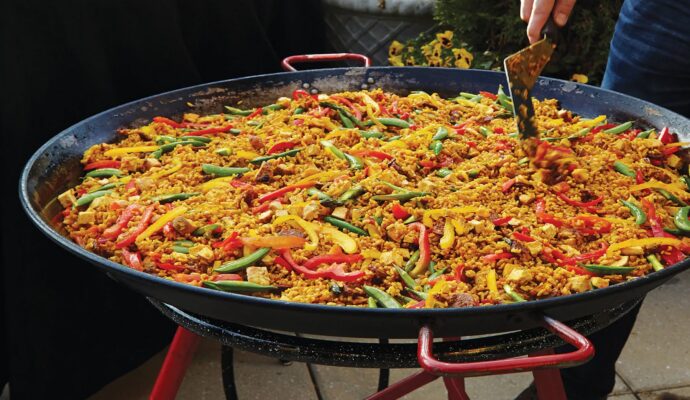
What did the process look like once the job was complete, and how did you find the overall ECS process?
Packing down was like any other job but we were just a lot more tired. NCASS sent us their invoice template, and we filled in our meal and drink counts for every day along with a daily mileage log, which is why keeping a careful record from the first hour mattered so much. NCASS handled everything with National Grid from there. Looking back, the process was straightforward, and the NCASS team were supportive and quick to answer every question, which left us free to focus on the people in front of us.
What would you say to another caterer thinking about joining the ECS?
Sign up. If you can feed a crowd off-grid, you already have what it takes. The days are long, but you’ll be there for people at one of the hardest moments of their year, often in your own community. A hot meal, a warm drink and a bit of kindness go a very long way. We’re grateful to the people of Penryn for letting us help, and to NCASS and National Grid for trusting us with the job. And if a callout ever needs a self-contained kitchen that can travel, we’re always ready to go.
 Featured Training

NCASS Membership
.
Simplify compliance, get expert support and unlock savings that cover the cost of membership.
Choose the option that matches how your business trades.
On the move
I run a mobile food or drink business
For food trucks, trailers, street food traders, market traders, event caterers and other mobile operators.
Fixed location
I run a fixed-site food or drink business
For cafés, restaurants, pubs, bars, takeaways, bakeries and other bricks-and-mortar businesses.
Not sure which membership is right for you? Use our membership matcher tool.