






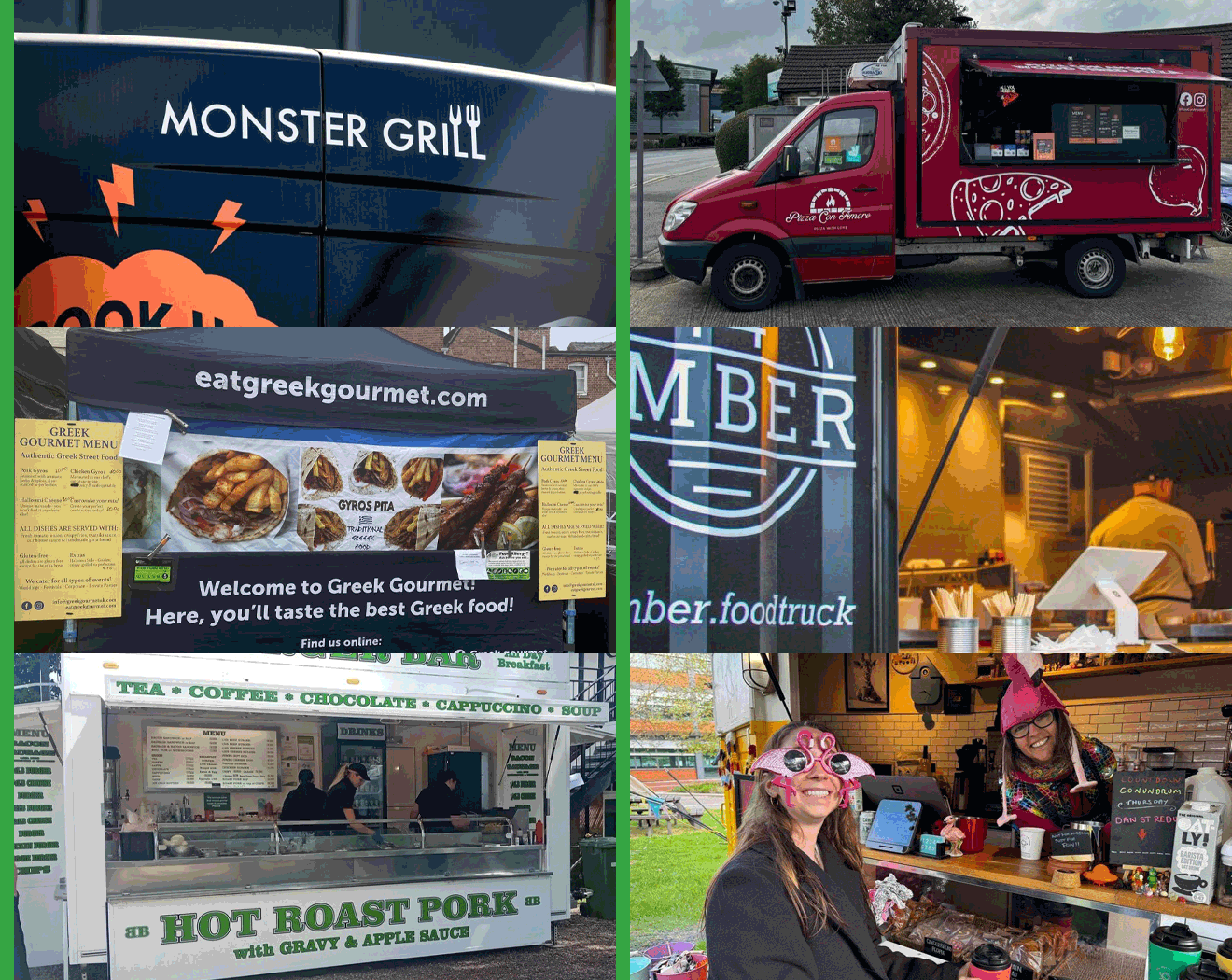
Behind every independent food business is a story that customers rarely get to see. The early starts, late finishes, financial risks, unexpected setbacks and countless hours of preparation that go into serving a plate of food, pulling a pint or catering for an event.
From the outside, running your own food business can look like an exciting opportunity to turn a passion into a career, which it certainly can be. The reality, however, is that building and maintaining a successful business takes much more than a good product and a love of food.
For some, it means leaving behind a secure career to take a chance on an idea. For others, it’s turning a small hobby into a full-time operation, navigating a difficult period or learning how to grow without losing sight of what made the business special in the first place.
We caught up with a number of NCASS members over the past few weeks to hear what running an independent food business is really like: the challenges, the unexpected lessons, the moments that make it worthwhile and the advice they’d give to others considering taking the plunge.
Here’s what they had to say.
The reality behind the dream
Starting a food business often begins with a passion, an idea or a desire to do something different. But as many members quickly discover, enjoying cooking and running a successful catering operation are two very different things.
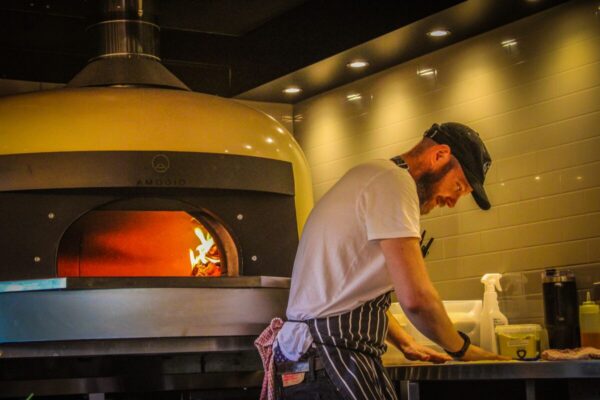
For the founder of Pizza Con Amore – Jamez Deruelle – leaving behind a secure, well-paid career in social housing to start a mobile pizza business was a huge leap of faith. With just eight practice pizzas under his belt, he bought a van, converted it into a wood-fired pizza operation and set off on his new venture.
Looking back, he admits he underestimated just how much would be involved.
“I presumed that making great pizza was the hard part. The reality is that’s probably only 20% of the job. The other 80% is logistics, preparation, customer service, marketing, bookkeeping, maintenance, staffing, ordering stock and solving problems you never expected.”
It’s a sentiment that many independent caterers will recognise. Customers see the finished product and the few hours spent serving at an event but rarely appreciate the preparation and organisation that happens beforehand.
Pizza Con Amore’s Jamez also points out just how much work goes into getting ready for every booking:
“Customers only see the few hours you’re serving. They don’t see the days beforehand making dough, shopping, prepping ingredients, cleaning equipment and organising everything behind the scenes.”
For Duncan McLachlan, founder of Ember Food Truck, the challenge is managing almost every aspect of the business himself. Despite having more than 20 years of professional chef experience, setting up independently has meant taking on a whole new range of responsibilities.
“I’m not only cooking, but I’m also developing menus, buying ingredients, preparing food, towing and setting up the unit, managing staff, answering enquiries, handling administration and looking after the finances.”
That’s before factoring in family life.
“Balancing all of that with family life and two young children can be extremely difficult. There have been many long days and very little sleep, but I’ve learned an enormous amount and I’m proud of how far Ember has come.”
These experiences highlight an important reality of independent catering: being good at the food is only one part of the job. Business owners need to become organisers, administrators, marketers, problem-solvers and financial managers, often all in the same day.
When the pressure starts to build
While the rewards of running an independent business can be significant, the pressures facing caterers are changing. Rising costs, staffing difficulties and customers becoming more price-conscious are forcing many businesses to rethink how they operate.
For Markos Klados of Greek Gourmet, who has spent almost a decade building his Greek street food business, the impact of rising operating costs has been particularly significant.
He describes a situation that many small business owners will recognise: trying to maintain quality while the cost of almost everything involved in running a business continues to increase.
His electricity bill, for example, has risen from around £500 a month in 2020 to approximately £1,500.
Rather than compromise on the quality of his food, Markos has made some difficult decisions about how the business operates, including reducing the menu.
“I would rather do fewer things and do them properly than keep expanding a menu that requires more staff and ultimately destroys the profitability of the business.”
It’s a good example of how adapting doesn’t necessarily mean expanding or introducing something new. Sometimes it means recognising what isn’t working and making changes to protect the long-term future of the business.
Markos has also found that staffing pressures have influenced his ability to grow. Having previously balanced a permanent takeaway with mobile catering, he has had to reconsider how much work he takes on.
As he explains:
“You cannot be everywhere at the same time.”
For Markos, maintaining consistency and protecting the reputation he’s spent years building are more important than taking on every available opportunity.
Rachael, founder of Short But Sweet Bakery, has taken a similarly cautious approach to growth, recognising the importance of making sure the business is financially sustainable before taking the next step.
When asked about the decisions involved in scaling up, she explained:
“I took everything cautiously when it came to scaling, only quitting my job when I was sure I had the correct income to cover all the bills etc.”
Her experience is a reminder that growth doesn’t have to happen overnight. Knowing when to take a risk is important but knowing when to hold back can be just as valuable.
The unexpected lessons you only learn by doing
One of the biggest themes to emerge from our conversations with members is just how much you learn once you’re actually running a business.
No amount of planning can prepare you for every situation, and sometimes the most valuable lessons come from things going spectacularly wrong.
Pizza Con Amore’s first public event is a particularly good example.
Having made just eight practice pizzas, Jamez arrived at his first event expecting to start trading. Within minutes, he had a queue of more than 100 people. There was just one problem: the generator he’d bought hadn’t been tested properly and wouldn’t work.
In a moment that could easily have ended the business before it had really begun, a customer started knocking on doors of nearby houses to find someone who would let the traders plug in. Thankfully, someone agreed, and they managed to get everything working.
Looking back, Jamez remembers “complete chaos!” But the experience taught him something important about preparation and the unpredictability of events.
His business journey wasn’t without bigger setbacks either. COVID forced him to change his operating model, and he eventually made the difficult decision to sell his original business.
At the time, he admits:
“Honestly, I felt like I’d failed.”
However, he later bought back his original pizza van and relaunched as Pizza Con Amore.
Reflecting on what happened, he says:
“Sometimes you need to step away before you’re ready to come back stronger.”
It’s a powerful reminder that setbacks don’t necessarily mean the end of a business journey. Sometimes they provide the experience needed to make a second attempt more successful.
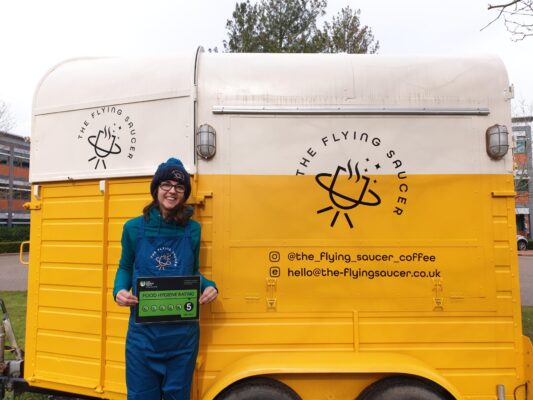
Emma Benson, founder of The Flying Saucer, also found that running her own business involved a much steeper learning curve than she initially anticipated.
After eight years working in the corporate world, Emma decided she wanted to do something more purpose-driven and launched her independent coffee business from a converted horse trailer.
Despite having some experience of the industry, she quickly realised there was still plenty to learn.
Her advice to other independent operators is refreshingly honest:
“You have to accept that there’s probably more you don’t know than do, but that’s okay and trust yourself to pick it up as you go.”
She also highlights the importance of being willing to ask for help, particularly when you’re starting out.
“Asking for help is not a failure or an embarrassment, we all need help sometimes and people are empathetic and so willing to help out.”
It’s an important point. Independent business owners can often feel they have to work everything out themselves, but speaking to other traders, asking questions and learning from people with more experience can make an enormous difference.
The sacrifices and the moments that make it worthwhile
For all the challenges, there are reasons why people continue to choose this industry.
Whether its seeing customers enjoy something you’ve created, building a loyal following or being part of a special occasion, the rewards are often about much more than financial success.
For Markos at Greek Gourmet, the feeling of seeing customers genuinely enjoy his food is still what motivates him after nine years in business.
He remembers the excitement of his first festival, when customers returned to thank him and tell him how much they’d enjoyed what he’d made.
That feeling, he says, remains one of the most important reasons he continues.
For April Hedges of M Hedges Catering, the rewards can extend well beyond the usual events calendar.
Through the NCASS Emergency Catering Service, April and her team were called upon to support emergency services during the Stourbridge wildfires.
With around 90 minutes to mobilise, the team prepared a catering unit and headed to the incident, where they provided food and refreshments for firefighters, police and displaced residents. Over three days, they served more than 1,000 meals.
Reflecting on the experience, April said:
“The thing I enjoyed most was seeing what our industry can do when it matters. To serve over 1,000 meals to exhausted firefighters, police and displaced residents and have them say that hot food and a cold drink kept them going – that means more than any festival.”
It’s an excellent example of the contribution independent caterers can make to their communities, and how the skills they use every day can be put to work in situations where they’re needed most.
For Monster Grill, a family-run business that has grown from one old van into four units serving four different cuisines, one of the biggest rewards has been being able to bring family members into the business.
The team reflected:
“I’d say my proudest moment is being able to bring my siblings along for the ride.”
They acknowledge that working together isn’t always straightforward but describe it as one of the most rewarding parts of building the business.
For Emma at The Flying Saucer, success isn’t necessarily about becoming the biggest coffee business in the area. It’s about creating an experience that customers want to return to.
She describes her ambition as having customers think:
“Oh my god, I can’t start my day without going to The Flying Saucer for a cuppa and a natter.”
It’s a lovely reminder that success can look very different depending on the business owner. For some, it’s expansion and awards; for others, it’s a loyal customer base and the satisfaction of doing something they love.
Growing a business doesn’t always mean getting bigger
It’s easy to assume that success means expanding, taking on more staff, opening new premises or adding more units. But speaking to independent caterers reveals a rather different picture.
For some, success is about finding a way to grow sustainably. For others, it’s about staying small enough to maintain quality, enjoy the work and retain control over the business they’ve built.
Rachael at Short But Sweet Bakery is a good example. What started as a hobby more than a decade ago has developed into an award-winning bakery with its own premises and a range of vegan and free-from products.
However, despite opportunities to expand further, she’s happy with the size of the business. When asked about her ambitions, she explained:
“I’m really happy with where the business is currently. I enjoy keeping it relatively small and manageable.”
She also makes a particularly important point about the pressures that can come with expansion:
“Getting bigger often means more problems!”
It’s an honest perspective that challenges the idea that every independent business needs to pursue continuous growth.
For Monster Grill, growth has happened more organically. Starting with burger experiments in the family kitchen and an old van provided by the founder’s dad, the business has developed into a multi-unit operation.
The founder’s advice to anyone considering starting their own street food venture is simple:
“Go for it! You’ll only find out if you try.”
But they are also realistic about the work involved, acknowledging that it’s a tough industry and that mistakes are part of the process.
Meanwhile, Markos at Greek Gourmet has spent years developing a business built around a relatively small menu and a commitment to consistency.
His approach is a useful reminder that growth should always serve the business, rather than become an objective in itself.
Ultimately, there’s no single definition of success in independent catering. The important thing is finding a way of working that is sustainable, rewarding and right for the business owner.
Advice from those who’ve been there
So, what would members tell someone thinking about starting their own food business?
Despite having very different experiences, there are some common messages: start with what you have, don’t underestimate the workload, learn from your mistakes and don’t be afraid to ask for help.
Rachael at Short But Sweet believes people shouldn’t put too much pressure on themselves to have everything in place before getting started.
Her advice is:
“It’s definitely better to start small and with what you have. Don’t put all the pressure on yourself at the beginning, enjoy the process of building and learning as you go.”
Emma at The Flying Saucer agrees that learning as you go is part of the experience but emphasises the importance of accepting support from others.
For Pizza Con Amore, the biggest lesson has been understanding that preparation and customer service are just as important as the food itself.
The founder also has some particularly valuable advice about making sure the business is financially sustainable:
“Don’t build a business that isn’t sustainable.”
And perhaps Monster Grill sums up the attitude needed to get started best:
“You’ll only find out if you try.”
It’s advice that captures much of what makes independent catering so special. There is no guaranteed formula for success, and every business will face its own challenges. But the willingness to learn, adapt and keep going is something that connects all these experiences.
Different businesses, shared experiences
From a first-time trader learning the ropes to an established operator navigating rising costs, the experiences of NCASS members show that there is no straightforward route to running a successful independent food business.
Some have grown from kitchen-table experiments into award-winning operations. Others have taken risks, experienced setbacks and found the confidence to start again. Some are expanding into new opportunities, while others are deliberately keeping things small to protect quality and maintain a better balance. What connects them is a shared passion for food, a determination to do things their own way and a willingness to keep learning.
Their experiences also highlight the importance of the wider independent catering community. Sharing knowledge, supporting fellow traders and learning from people who have already faced similar challenges can make a real difference.
Running a food business isn’t always easy, and the reality doesn’t always match the dream. But as these members demonstrate, the rewards of building something of your own, serving your customers and creating a business you’re proud of can make all the hard work worthwhile.

 Featured Training

.
Simplify compliance, get expert support and unlock savings that cover the cost of membership.
On the move
I run a mobile food or drink business
For food trucks, trailers, street food traders, market traders, event caterers and other mobile operators.
Fixed location
I run a fixed-site food or drink business
For cafés, restaurants, pubs, bars, takeaways, bakeries and other bricks-and-mortar businesses.
Not sure which is right for you?
Answer a few quick questions and we'll recommend the best fit.