




In hospitality, saying yes can often feel like the safest option. Another event could mean another customer, another menu item could mean another sale, another late night could mean another booking. When you’re running an independent business, turning down work can feel like turning down money, but what if the opposite is sometimes true?
Looking back through NCASS Member Spotlights from the past 12 months, some of the most valuable lessons aren’t about what caterers have added to their businesses. They’re about what they’ve cut back, walked away from, outsourced or simply decided wasn’t worth doing anymore. That’s not about becoming less ambitious, it’s about becoming more selective.
When you’re working with finite time, people, money and energy, every decision to say yes comes at a cost. The event that ties up your team for three days might not be the most profitable booking. The extra menu choices might create more waste than revenue. The task you’ve always done yourself might be keeping you from working on the part of the business that actually needs you.
Across this year’s Member Spotlights, independent caterers have been finding their own ways to draw those lines.
We’ve pulled together some of the things they’ve learned to say no to and, more importantly, what those decisions have allowed them to say yes to instead.
Say no to doing everything
One of the clearest lessons from this year’s Spotlights is that running a food business is about far more than cooking.
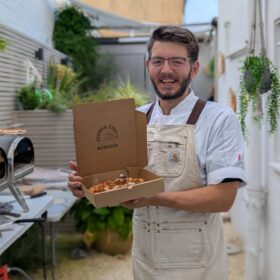
Pizza Con Amore’s founder reflected on the early days of the business and the misconception that making great pizza would be the difficult part. In reality, he found that the majority of the job involved logistics, preparation, customer service, marketing, bookkeeping, maintenance, staffing, ordering and problem-solving.
That is a familiar reality for independent caterers: the person who started the business often ends up doing almost everything. That doesn’t mean however, that they should keep doing everything forever.
Crocus Paella offers a useful example. After years of managing social media themselves, the business eventually outsourced most of its content to a local freelancer. The result was more consistent content while freeing the team to concentrate on the parts of the business they actually enjoyed and did best.
The lesson isn’t necessarily “outsource your social media.” It’s to ask a more useful question:
What am I doing because I’m the best person to do it, and what am I doing simply because I’ve always done it?
Say no to menus that try to please everyone
More choice can look like better customer service, but several members’ experiences suggest that more choice can also mean more stock, more waste, more preparation, more staff and slower service.
Greek Gourmet has been particularly direct about this. Rising energy and labour costs led the business to significantly reduce its menu, with founder Markos explaining:
“I would rather do fewer things and do them properly”
That isn’t about offering less for the sake of it. It’s about making sure what you do offer is profitable, consistent and up to your standards.
House Kitchen Catering found something similar in its early days. Keeping the menu simple helped the business control staffing and costs while maintaining quality and consistency. As the business grew into larger events, weddings and corporate catering, those foundations remained useful.
Smokey Joe’s BBQ takes the same principle from another direction, describing its approach as putting fewer things on the menu but making them full of flavour.
For an established caterer, it might be worth looking at your menu and asking: Which items genuinely earn their place?
Not always which ones are popular or that customers occasionally ask for. Which ones justify the stock, prep, equipment, storage and labour they require?

Say no to events that don’t stack up
A busy event isn’t necessarily a profitable event. That’s something NCASS members have repeatedly demonstrated, and it’s particularly relevant to anyone looking at their upcoming event diary.
Crocus Paella recalls the pressure of paying a substantial pitch fee for an early major festival, with the business depending heavily on the event going well. Today, the business takes a more measured approach, looking for opportunities that fit its capacity and business model.
NCASS’s own recent guidance makes the same point: caterers need to consider much more than the pitch fee, including staff, stock, travel, accommodation, packaging, utilities, capacity, competition and pitch location. Sometimes the correct commercial decision is simply to walk away.
Pizza Con Amore’s founder makes a similar point from his own experience, warning against accepting work simply to get your name out there if the economics don’t make sense. He argues that quality catering needs to work for both parties.
So before accepting the next impressive-looking booking, ask: If I strip away the prestige, the crowd numbers and the excitement, does this actually make money?
If the answer isn’t clear, that may be your answer.
Say no to growth for growth’s sake
Growth is usually presented as the ultimate goal: More units, more staff, more events, more locations and more turnover. The Spotlights suggest that successful independent businesses are often much more deliberate than that.
Chick ‘N’ Sours describes its priority as sustainable growth, while Crocus Paella talks about being open to opportunities only when they stack up and the business has the capacity.
Pizza Con Amore is considering a second mobile unit and potentially a permanent site, but the founder is equally clear about wanting to maintain quality, service and the personal touch that built the business. That’s an important distinction.
Growth that makes you more profitable, more resilient or gives you a better business is useful. Growth that simply makes you busier isn’t necessarily progress.
For established operators, saying no might mean delaying that second unit, refusing a new site, declining work you don’t have capacity to deliver properly, or deciding that your current size is actually the right size.

Say no to compromising quality
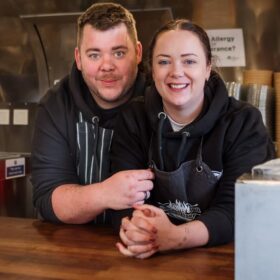
When costs rise, quality can be one of the easiest things to compromise. Slightly cheaper ingredients, smaller portions, faster preparation, less staff and less time spent on the details. Several members have taken the opposite approach.
The Black Sheep Grill says it would rather serve slightly smaller portions than lower quality.
Stone’s Throw Kitchen has built its identity around doing things properly, with founder George emphasising the importance of staying true to the business’s identity.
Truly Torta has taken perhaps the strongest position of all. After rebuilding the business, founder Andy focused on traditional Mexican food and explicitly rejected diluting or Americanising it for convenience.
That’s a useful reminder that saying no isn’t always about cutting costs.
Sometimes it’s about refusing to make a decision that saves money today but weakens the reason customers choose you tomorrow.
Say no to copying someone else’s business model
There is an understandable temptation in hospitality to look sideways. Someone else is doing well at festivals – their menu is working, their Instagram is growing, they’ve opened a restaurant, or they’ve bought another van. You consider doing the same.
Kiernan’s Coffee offers a useful warning against that kind of thinking:
“What works for other people does not always work for you”
The business has evolved by working out its own strengths rather than simply copying someone else’s formula.
Blow Water provides another perspective. Its founder has deliberately kept the business personal and community-led, with an intentionally unpolished approach to social media because, in her experience, customers don’t necessarily care about perfection.
There isn’t one correct way to run an independent hospitality business.
The right question isn’t “What are successful businesses doing?”
It’s “Which of those things actually makes sense for my business?”
Say no to waiting until everything is perfect
There is one apparent contradiction in all of this. While members have learned to say no to the wrong opportunities, they’ve also learned not to say no to themselves.
Raving Ices entered the industry without a background in desserts, buying an ice cream van and learning by doing. The business then evolved into something quite different, combining ice cream with DJing, music and creative events.
Pizza Con Amore’s founder admits he was nowhere near as prepared as he thought he was when he started. His first event involved a queue of more than 100 people and a generator that hadn’t been properly tested. Yet that experience became one of the foundations for building better systems.
Ginger Cat Coffee deliberately started small, testing its offer at events and adapting the menu based on customer feedback before moving into larger setups.
The takeaway is important: Say no to unnecessary risk. Don’t say no to learning.
You don’t need to have everything figured out. But you do need to be prepared to learn quickly, listen to customers and change what isn’t working.
The real skill might be knowing what to leave out
Looking across the Member Spotlights from the past year, there isn’t one formula for success. There are businesses focused on festivals, private catering, permanent sites, coffee, pizza, BBQ, street food, retail products and completely new combinations of hospitality and entertainment.
What connects many of them isn’t the size of the business or the type of food. It’s the willingness to make decisions: to remove a menu item, to reject an event, to outsource a task, to protect quality, to stop chasing an opportunity that doesn’t fit, or to grow only when the numbers and capacity make sense. Sometimes, it comes down to admitting that something isn’t working and changing direction. For independent caterers, that’s perhaps the biggest lesson of all.
You don’t have to say yes to everything to build a successful hospitality business.
In fact, the more established your business becomes, the more valuable it may be to know exactly what you won’t do, because every “no” creates space for a better “yes”.
In a sector where time, people, money and energy are all limited, knowing where to put those resources could be one of the most important business decisions you make.

 Featured Training
OUR MEMBERSHIP
We're here to help make your catering business a success. Whether that be starting up or getting on top of your compliance and marketing. We're here to help you succeed.
Want our latest content?
Subscribe to our mailing list and get weekly insights, resources and articles for free
Get the emails